
What's Happening?
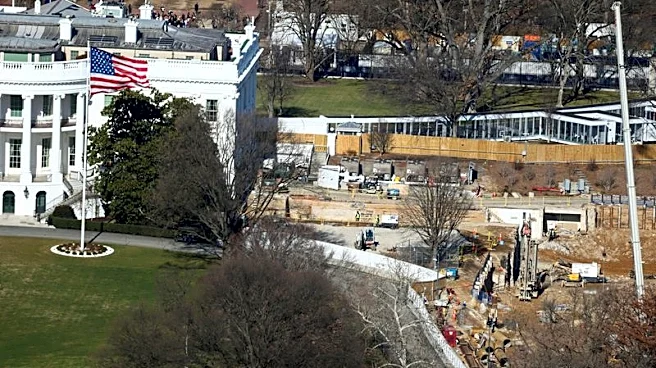
Government lawyers representing President Trump have filed an emergency appeal to resume construction of the White House East Wing after a lower court judge halted the project. The legal filing, which
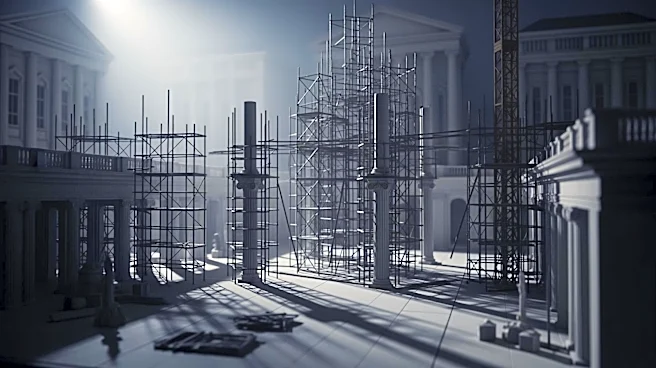
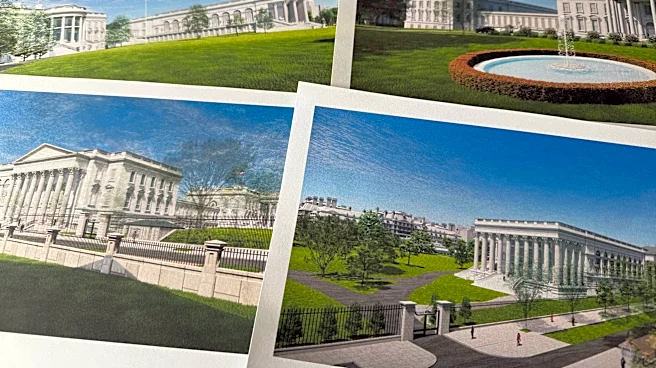
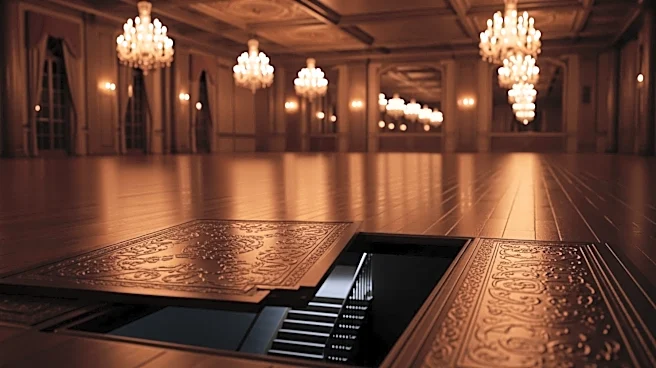
includes stylistic elements typical of President Trump's social media posts, argues that the unfinished East Wing poses potential national security risks. The proposed construction includes advanced security features such as missile-resistant steel columns and drone-proof roofing materials. The structure is also planned to house bomb shelters, a hospital, and top-secret military installations. The appeal follows a preliminary injunction issued by federal judge Richard Leon, who stated that congressional approval is required before continuing the project. The administration has indicated that the case may be escalated to the Supreme Court if the construction remains on hold.
Why It's Important?
The appeal to resume construction of the White House East Wing underscores the administration's focus on enhancing security measures at the presidential residence. The inclusion of advanced security features reflects concerns about potential threats and the need for fortified infrastructure. The legal battle over the construction project highlights tensions between the executive branch and judicial oversight, particularly regarding the requirement for congressional approval. The outcome of this case could set a precedent for future executive actions related to national security and infrastructure projects. Additionally, the involvement of private donors in funding the project raises questions about the influence of private interests in government decisions.
What's Next?
If the appeal is successful, construction of the East Wing could resume, potentially leading to further legal challenges from the National Trust for Historic Preservation, which initially filed the lawsuit. The administration's decision to escalate the case to the Supreme Court, if necessary, indicates a strong commitment to completing the project. Congressional leaders may also weigh in on the issue, given the requirement for legislative approval. The broader implications of this case could influence future infrastructure projects and the balance of power between the executive and legislative branches.
Beyond the Headlines
The stylistic elements of the legal filing, reminiscent of President Trump's social media posts, highlight the unique communication style of the administration. This approach may affect public perception of the administration's priorities and its handling of legal matters. The emphasis on private funding for the project raises ethical questions about the role of private donations in government infrastructure projects and the potential for conflicts of interest. The case also touches on historical preservation concerns, as the construction impacts the architectural integrity of the White House.