





What's Happening?
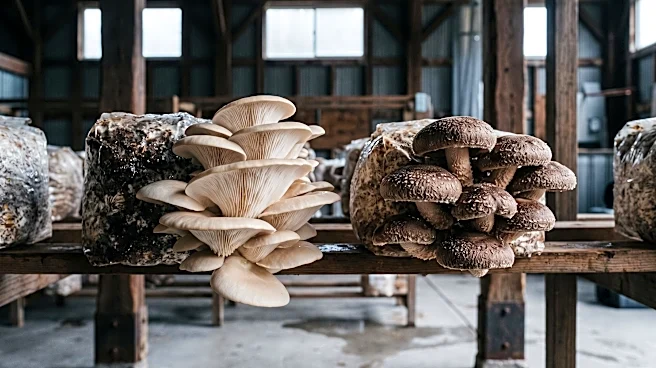
The Faaborg family farm in central Iowa has successfully transitioned from a Concentrated Animal Feeding Operation (CAFO) that raised thousands of hogs to cultivating specialty mushrooms. This transformation was made possible with technical and financial
support from The Transfarmation Project, an initiative of Mercy For Animals. The Faaborgs, who previously housed 1,100 hogs in each of their two buildings, have retrofitted half of one 200-foot-long hog barn into a 'fruiting room' for mushrooms. This farm now serves as Transfarmation's second demonstration hub in the U.S., providing a model for other industrial animal farmers looking to switch to sustainable practices like growing mushrooms, diversified vegetables, or incorporating agroecology. The project aims to repurpose existing farm infrastructure, offering open-source blueprints for converting industrial pig, poultry, and dairy barns.
Why It's Important?
This transition is significant as it offers a tangible solution for farmers seeking to move away from the economic and environmental challenges associated with industrial animal agriculture. Factory farming, particularly CAFOs, has been linked to negative health impacts on workers and surrounding communities, as well as significant environmental pollution from nutrient-rich manure. The Faaborg family's experience demonstrates that repurposing existing infrastructure for alternative crops can be a viable and profitable path, addressing both economic sustainability for farmers and environmental concerns. The Transfarmation Project's model, by providing resources and data from demonstration hubs, can encourage broader adoption of such transitions, potentially reducing the prevalence of CAFOs and fostering more sustainable agricultural landscapes across the U.S. It also highlights the growing demand for specialty crops and alternative food systems.
What's Next?
The Faaborg family plans to scale up their mushroom production, with aspirations to sell fresh mushrooms to companies and eventually convert their second hog barn for other specialty crops like microgreens. As a demonstration hub, their farm will collect and share data on costs, labor, and product margins, providing valuable insights for other farmers considering similar transitions. The Transfarmation Project will continue to support farmers in moving from industrial animal farming to sustainable practices, offering resources and blueprints for repurposing existing infrastructure. This initiative aims to create more 'proof of concept' farms to inspire and guide others. The broader goal is to shift market demand towards plant-based options and reduce the overall volume of animal slaughter globally, with organizations like Mercy For Animals actively promoting vegan living and working to end factory farming.
Beyond the Headlines
The Faaborg family's story represents a microcosm of a larger movement towards agricultural diversification and environmental restoration. Their decision to convert a manure pit into a freshwater pond, partially funded by a USDA grant, symbolizes a shift from environmental burden to ecological benefit, fostering wildlife habitats and improving water quality. This transformation challenges the conventional narrative of industrial agriculture as the sole path to profitability for large-scale farms. It also underscores the potential for former CAFO sites to become centers for regenerative agriculture, contributing to climate change mitigation by reducing methane emissions from manure and promoting healthier ecosystems. The project highlights the importance of support systems like The Transfarmation Project in facilitating such transitions, demonstrating that economic viability and environmental stewardship can go hand-in-hand, leading to a more resilient and sustainable rural economy.