





What's Happening?
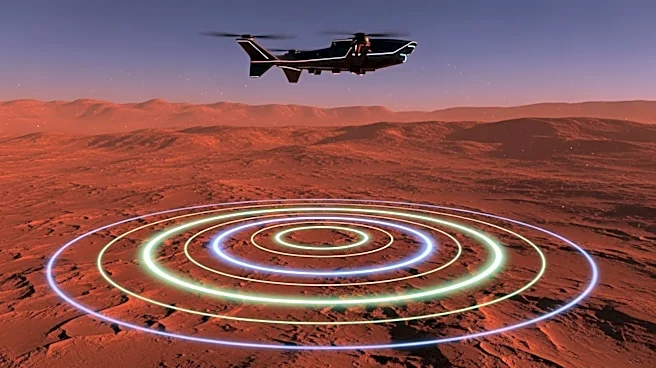
Researchers from the University of Arizona have developed a new method using drones equipped with ground-penetrating radar to locate water ice on Mars. This technology, tested on glaciers in Alaska and Wyoming, allows for detailed mapping of ice deposits
beneath debris, which orbiters have struggled to achieve. The study suggests that drones could serve as intermediate scouts, refining maps created by orbiters and guiding surface missions to the most promising drilling sites. This approach could significantly enhance the efficiency and precision of future Mars exploration missions.
Why It's Important?
The ability to accurately locate and map water ice on Mars is crucial for future exploration missions. Water ice is not only a potential resource for future astronauts, providing drinking water and oxygen, but it also holds scientific value as a record of past climate conditions. By improving the precision of ice detection, this technology could reduce the risks and costs associated with Mars missions, making them more viable. Additionally, it could increase the chances of discovering signs of past life by targeting the most promising sites.
What's Next?
The integration of drone-based radar systems into Mars exploration strategies could lead to more targeted and efficient missions. As the technology is further developed and tested, it may become a standard tool for scouting potential landing and drilling sites. This could pave the way for more ambitious missions, including human exploration, by ensuring that resources are available and accessible. The success of this technology on Earth suggests that it could be adapted for use on Mars, potentially transforming how missions are planned and executed.
Beyond the Headlines
The use of drones in space exploration represents a significant shift in how missions are conducted. By providing a middle layer of exploration between orbiters and surface missions, drones could offer a new level of detail and flexibility. This approach could also inspire similar innovations in other areas of space exploration, such as asteroid mining or lunar missions. The success of this technology could lead to broader acceptance and integration of drones in various scientific and exploratory missions beyond Earth.