


What's Happening?
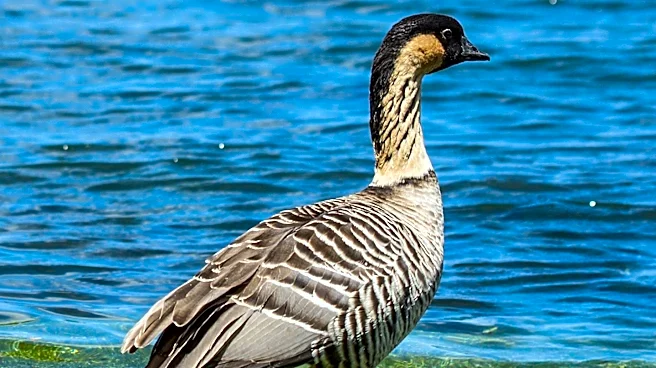
The U.S. Fish and Wildlife Service has downgraded the status of the Hawaiian stilt, or ae‘o, from endangered to threatened following successful conservation efforts. The bird's population has increased nearly tenfold, from about 200 to nearly 2,000, due
to habitat restoration and predator control. Despite this success, some conservationists express concern that the change in status may lead to reduced protections under the Trump administration's less stringent conservation rules. The ae‘o's recovery is seen as a rare success story in Hawaii, which is known for its high number of endangered species.
Why It's Important?
The downgrading of the ae‘o's status reflects the effectiveness of conservation efforts and highlights the potential for recovery of endangered species with targeted interventions. However, it also raises concerns about the adequacy of protections for species that are still vulnerable to threats such as climate change and habitat loss. The decision may influence future conservation policies and resource allocation, as it demonstrates the impact of habitat restoration and predator management. The broader implications for other endangered species in Hawaii, which face similar challenges, are significant.
What's Next?
The ae‘o will continue to benefit from protected wetland habitats, but its new status may lead to changes in how these areas are managed. Conservationists may advocate for continued monitoring and protection to prevent the species from slipping back into endangered status. The decision may also prompt discussions on the balance between economic development and conservation, as federal policies now require consideration of economic impacts when designating protected habitats. Ongoing research and community involvement will be crucial to ensure the long-term survival of the ae‘o and other vulnerable species.
Beyond the Headlines
The ae‘o's recovery story highlights the importance of community involvement and traditional knowledge in conservation efforts. The bird's ability to coexist with local farmers and restoration projects demonstrates the potential for collaborative approaches to conservation. The situation also underscores the need for adaptive management strategies that can respond to changing environmental conditions and policy landscapes. As Hawaii continues to face challenges related to biodiversity loss, the ae‘o's story offers hope and lessons for future conservation initiatives.