



What's Happening?
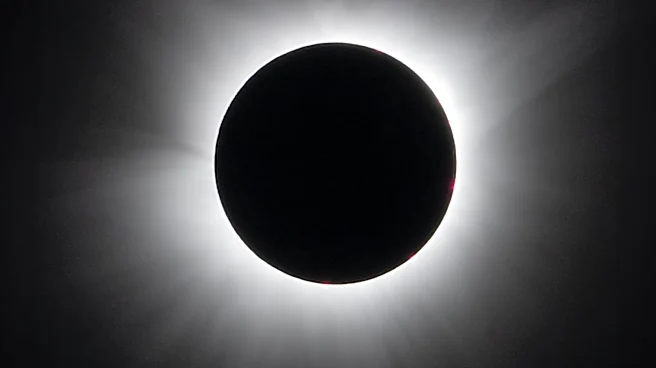
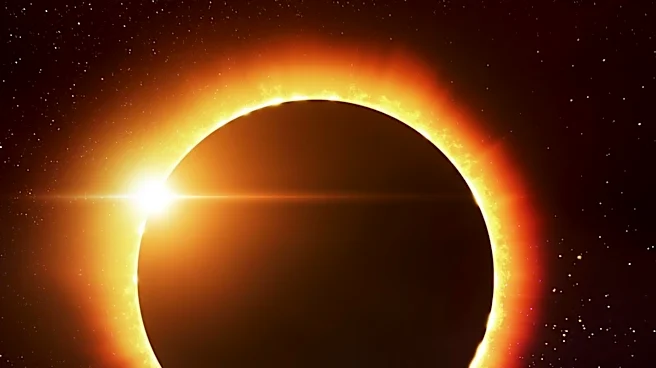
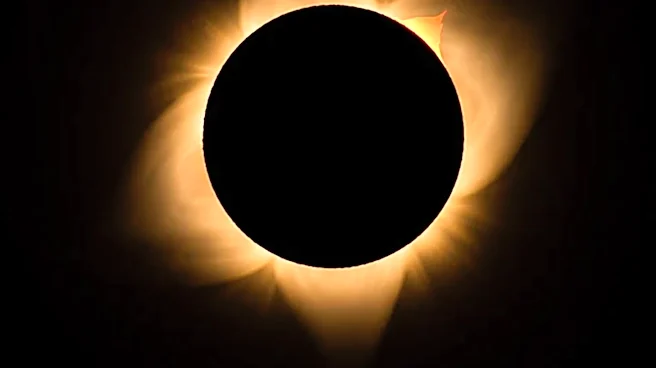
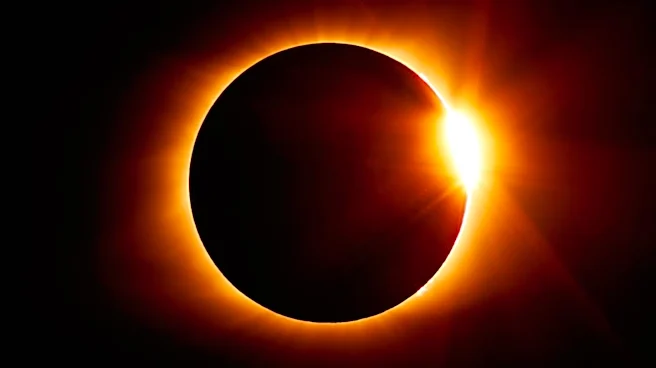
As a total solar eclipse approaches, scientists are preparing to study the mysterious phenomenon of shadow bands, which appear as rippling patterns of light and dark just before and after totality. David Turnshek, a professor of physics and astronomy,
has been investigating shadow bands since witnessing them as a teenager. The phenomenon has two competing theories: one attributes it to atmospheric turbulence, while the other suggests diffraction-interference effects. Turnshek's previous research during the 2017 eclipse suggested that both theories might be valid. The upcoming eclipse provides another opportunity to gather data and potentially resolve the mystery.
Why It's Important?
Understanding shadow bands could enhance scientific knowledge of atmospheric and optical phenomena associated with solar eclipses. This research has implications for both astronomy and atmospheric science, as it could improve models of light behavior and atmospheric conditions during eclipses. Additionally, studying shadow bands contributes to the broader understanding of how light interacts with the Earth's atmosphere, which is relevant for various scientific and practical applications, including climate studies and optical technologies.