






What's Happening?
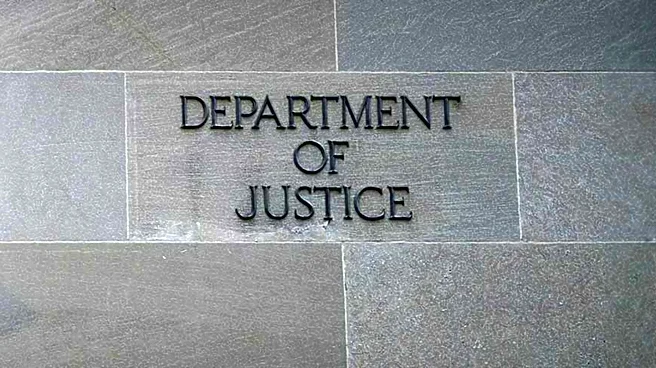
A federal judge in Michigan has criticized the Trump administration's Department of Justice for submitting a legal filing in an immigration detention case that included a citation to a nonexistent court decision. Chief U.S. District Judge Hala Y. Jarbou,
appointed by President Trump, identified the issue in a habeas corpus case involving an Immigration and Customs Enforcement (ICE) detainee. The case was ultimately dismissed as moot after the government allowed the detainee to be released on a $35,000 bond. The judge's order highlighted that the citation, purportedly from the Sixth Circuit, was likely generated by artificial intelligence, referencing a case titled Taylor v. Hott, which does not exist. This incident underscores ongoing tensions between the judiciary and the Trump administration, with federal judges increasingly scrutinizing government actions.
Why It's Important?
The incident raises significant concerns about the use of artificial intelligence in legal proceedings, particularly regarding the accuracy and reliability of AI-generated content. The judge's admonishment serves as a warning to legal professionals about the potential pitfalls of relying on AI tools without thorough verification. This situation highlights the broader implications for the legal industry, where the integration of AI must be carefully managed to maintain the integrity of legal processes. The case also reflects ongoing scrutiny of the Trump administration's legal strategies, which have faced criticism from the judiciary. The potential for AI to introduce errors into legal documents could undermine trust in the justice system and complicate legal proceedings.
What's Next?
While Judge Jarbou did not impose sanctions, she emphasized the need for government attorneys to ensure that future filings do not contain fabricated legal authorities. This incident may prompt the Department of Justice and other legal entities to review their use of AI tools and implement stricter verification processes. Legal professionals may need to develop new protocols for integrating AI into their work to prevent similar issues. The judiciary may also consider establishing guidelines for the use of AI in legal research and filings to safeguard against inaccuracies. This case could lead to broader discussions about the role of AI in the legal field and the responsibilities of attorneys in verifying AI-generated content.