




What's Happening?
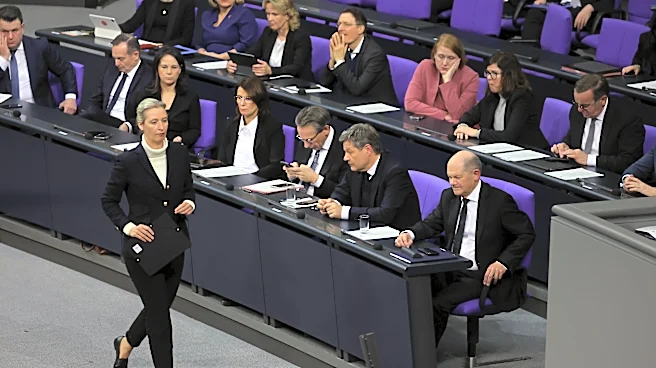
The German Bundestag has approved the extension of the Bundeswehr's participation in the EU-led Operation EUNAVFOR MED Irini for another year, until November 30, 2027. The mission, primarily focused on creating a comprehensive maritime picture in the Mediterranean,
has seen a reorientation of its tasks. While the operation can no longer enforce the UN arms embargo through ship inspections due to the expiration of the relevant UN authorization, it will continue to collect information on potential violations and forward it to the United Nations. The new mandate emphasizes protecting EU interests in the Mediterranean, contributing to UN resolutions, monitoring embargo violations, tracking illicit oil exports from Libya, and combating smuggling and human trafficking networks. A new focus is also placed on addressing the activities of the 'shadow fleet' of tankers.
Why It's Important?
Germany's continued involvement in Operation Irini is significant for U.S. and broader international security interests in the Mediterranean. The mission contributes to regional stability by monitoring activities that could fuel conflicts, such as arms smuggling to Libya, and by combating human trafficking, which often has transnational implications. The shift in Irini's mandate, particularly the inability to directly enforce the arms embargo through inspections, highlights the challenges of international cooperation and the limitations imposed by expiring UN authorizations. This could potentially weaken efforts to prevent illicit arms flows, which could destabilize Libya and the wider region, impacting U.S. strategic interests in counter-terrorism and regional security. The focus on the 'shadow fleet' also aligns with international efforts to counter sanctions evasion, particularly concerning Russian oil exports, which has direct economic and geopolitical relevance for the U.S. and its allies.
What's Next?
The extension of the mandate until November 2027 means the Bundeswehr will continue its contributions, primarily through staff and aerial surveillance. The mission's effectiveness in its reoriented role, particularly in gathering intelligence on embargo violations and the 'shadow fleet,' will be closely watched. The inability to conduct direct inspections for arms embargo enforcement may necessitate alternative strategies or increased reliance on intelligence sharing and diplomatic pressure. The German government's commitment to supporting Libya through humanitarian, stabilization, and development measures, alongside the EU's civilian mission EUBAM Libya, indicates a multi-faceted approach to regional stability. Any further extension beyond November 2027 will require another approval from the German Bundestag, suggesting ongoing parliamentary oversight and potential adjustments based on evolving regional dynamics and mission effectiveness.
Beyond the Headlines
The evolution of Operation Irini's mandate, particularly the loss of direct enforcement powers for the arms embargo, underscores a critical vulnerability in international efforts to maintain peace and security. The reliance on intelligence gathering without the full authority to interdict suspected violations can create a 'watch but not act' scenario, potentially undermining the deterrent effect of the embargo. This situation also highlights the complexities of international law and the political will required to sustain robust multilateral operations. The explicit focus on the 'shadow fleet' reveals a growing concern among Western powers about illicit shipping activities that circumvent sanctions and pose environmental risks. This development could lead to new legal frameworks or enhanced international cooperation to address these challenges, as traditional maritime laws may not fully cover the nuances of such operations. The mission's future success will depend on its ability to adapt to these legal and operational constraints while still achieving its core objectives.