






What's Happening?
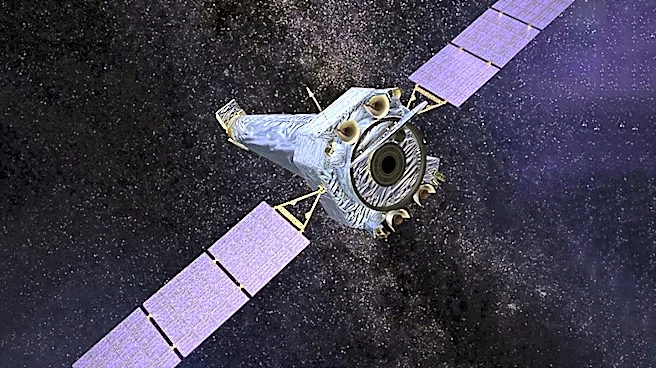
Katalyst Space Technologies is facing significant technical challenges with its Link spacecraft, launched to boost the orbit of NASA's Swift Observatory. The spacecraft is experiencing attitude control problems, resulting in a multi-axis spin and communication
issues. Two of the three reaction wheels, essential for maintaining orientation, are non-functional, and the reaction control system thrusters are only partially operational. The mission, which began on July 3, aims to dock with Swift and raise its orbit to prevent reentry. Despite these setbacks, Katalyst is working to stabilize the spacecraft using its electric thrusters and plans to update its guidance systems.
Why It's Important?
This mission is crucial for extending the operational life of the Swift Observatory, which plays a key role in detecting gamma-ray bursts. The challenges faced by Katalyst highlight the complexities of space missions, particularly those involving satellite servicing. The success or failure of this mission could impact future collaborations between NASA and private companies, as well as the development of commercial space technologies. The situation underscores the importance of robust engineering and contingency planning in space operations.
What's Next?
Katalyst is actively working to stabilize the Link spacecraft and plans to update its systems to reflect the current configuration. The company remains optimistic about the mission's viability and is preparing for the next phase, which involves approaching and docking with Swift. The outcome of these efforts will determine the mission's success and could influence future satellite servicing missions. Continued updates from Katalyst will provide insight into the mission's progress and potential adjustments to the strategy.