






What's Happening?
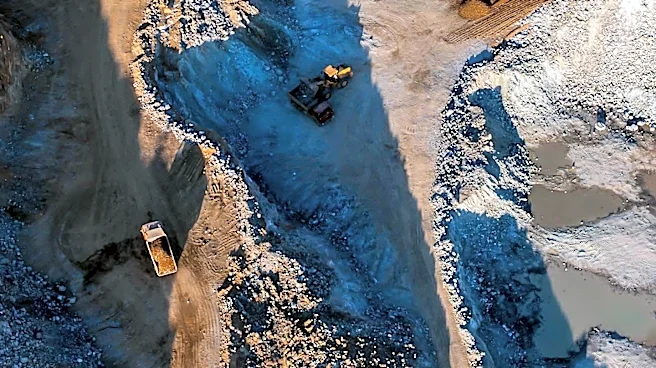
Adam Cawood, the Michael G. and Susan T. Thonis Assistant Professor of Earth Sciences at Syracuse University’s College of Arts and Sciences, is leading a research project funded by the National Science Foundation (NSF). This initiative aims to understand
how geological processes influence the movement and concentration of lithium within Earth's crust. The research is critical because scientists currently lack a complete understanding of why lithium concentrates in specific locations and how to efficiently identify new domestic sources. The demand for lithium, a vital component in rechargeable batteries for electric vehicles and renewable energy systems, is projected to more than quadruple by 2030, making it one of the most sought-after critical minerals globally. Cawood's work could significantly improve exploration strategies and bolster domestic supplies of this essential mineral, supporting the ongoing energy transition.
Why It's Important?
The increasing global reliance on electric vehicles, renewable energy systems, and battery storage technologies has dramatically amplified the demand for lithium. This critical mineral is fundamental to the clean energy transition, and a secure, domestic supply is crucial for U.S. energy independence and economic stability. Cawood's research directly addresses a significant knowledge gap in geoscience regarding lithium's geological concentration. By improving the understanding of these processes, the U.S. can enhance its ability to discover and extract lithium more effectively within its borders. This will reduce reliance on foreign sources, mitigate supply chain vulnerabilities, and potentially lower the cost of clean energy technologies. The project also contributes to the broader scientific foundation needed for responsible natural resource management and expands educational opportunities in Earth sciences, benefiting both industry and academia.
What's Next?
The NSF-funded project led by Professor Cawood is expected to yield new insights into the geological mechanisms that control lithium concentration. These findings will likely inform and refine future lithium exploration strategies within the United States. Improved understanding could lead to the identification of previously unknown or underestimated domestic lithium deposits, potentially accelerating their development. The research may also influence policy decisions related to critical mineral extraction and environmental regulations, ensuring that resource development is conducted responsibly. Furthermore, the project's outcomes could foster collaborations between academic institutions, government agencies, and private industry to translate scientific discoveries into practical applications for securing a sustainable lithium supply chain. The ongoing research will continue to shape how geological knowledge is preserved and shared, impacting future generations of geoscientists.
Beyond the Headlines
The research into lithium concentration extends beyond immediate supply chain concerns, touching upon broader ethical and environmental considerations. The increased demand for critical minerals like lithium raises questions about the environmental impact of mining operations, including land use, water consumption, and waste generation. Cawood's work, by optimizing exploration and extraction, could contribute to more sustainable mining practices, minimizing ecological footprints. Furthermore, the project highlights the critical role of geoscience in addressing global challenges like climate change and energy security. It underscores the need for continued investment in scientific research and education to develop innovative solutions for resource management. The accessibility of geological knowledge, as reimagined by Cawood's initiatives, is crucial for fostering a global scientific community capable of tackling complex resource-related issues and ensuring an equitable transition to a clean energy future.