






What's Happening?
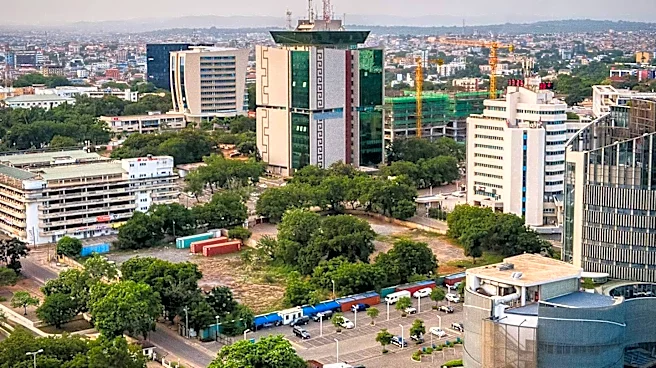
Ghana plans to invest $1 billion in its textile and garment industry between 2027 and 2030, as announced by Finance Minister Cassiel Ato Forson on November 12. This investment is part of the government's four-year, $10 billion economic development program,
'The New Economy, New Ghana: Jobs and Prosperity.' The initiative aims to upgrade textile mills, expand garment production, and develop industrial zones. Funding will be sourced from the government, private investors, and development finance institutions. The government will cover site preparation and shared infrastructure, while private investors will finance and operate textile and garment factories. The plan also includes providing equipment and technical support to designers, tailors, and dressmakers, and amending public procurement laws to reserve certain contracts for Ghanaian manufacturers. This move follows decades of decline in Ghana's textile industry, with annual fabric production falling significantly and many garment factories operating at less than 40% capacity due to insufficient orders.
Why It's Important?
While this initiative is focused on Ghana, it holds indirect importance for the U.S. textile and apparel industry. A revitalized Ghanaian textile sector could potentially become a more competitive player in the global market, affecting international trade dynamics. U.S. companies that import textiles or apparel, particularly those seeking diversified supply chains, might find new opportunities in Ghana. Conversely, U.S. manufacturers could face increased competition from Ghanaian products in certain market segments. The emphasis on local production and reserved public contracts in Ghana reflects a broader global trend of nations prioritizing domestic industries, which could influence U.S. trade policies and the strategies of U.S. businesses operating internationally. The success of Ghana's investment could also serve as a case study for other developing nations looking to rebuild their industrial bases, potentially altering global manufacturing landscapes.
What's Next?
Under the 2027-2030 investment program, Ghana plans to select sites for industrial zones in 2027 and begin developing shared infrastructure in 2028. The government will continue efforts to bring existing factories back into production, such as the revival of Volta Star Textiles. The implementation of amended public procurement laws will reserve contracts for Ghanaian manufacturers, including uniforms, hospital textiles, and protective clothing. These steps indicate a clear roadmap for the industry's revitalization. U.S. businesses and investors interested in African markets will likely monitor Ghana's progress, as successful implementation could signal new avenues for foreign direct investment and partnerships in the region. The 'Dress Ghana and Build Ghana' campaign, along with extended tax incentives, will continue to promote local consumption and production.
Beyond the Headlines
Ghana's ambitious plan to rebuild its textile industry goes beyond mere economic recovery; it represents a strategic effort to foster national self-reliance and create sustainable employment. The decline of the industry over decades highlights the challenges faced by many developing nations in maintaining industrial capacity against global competition. This investment signifies a commitment to economic diversification and job creation, particularly for skilled labor in design and manufacturing. For the U.S., this development underscores the importance of understanding evolving global economic landscapes and the potential for new manufacturing hubs to emerge. It also raises questions about the role of international aid and investment in supporting industrial development in Africa, and how such initiatives can contribute to global economic stability and reduce reliance on single-source supply chains.