

What's Happening?
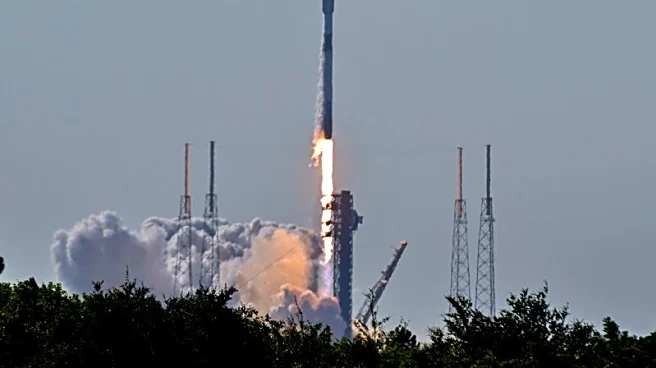
SpaceX is preparing to launch 119 payloads to a Sun-synchronous orbit as part of its Transporter 16 mission. This mission is part of SpaceX's SmallSat Rideshare Program, which offers satellite operators cost-effective access to space compared to dedicated
launches. The launch is scheduled for March 30 from the Vandenberg Space Force Base in California, using the Falcon 9 rocket. The mission will deploy various payloads, including picosatellites, nanosatellites, and an orbital service vehicle. Exolaunch, a German company, is the largest customer, with 57 payloads. The mission will also include payloads from SEOPS and Momentus Inc., representing 13 countries and various academic, government, and commercial purposes.
Why It's Important?
The Transporter 16 mission highlights the growing demand for affordable access to space, particularly for small satellite companies. SpaceX's rideshare program enables diverse scientific studies and technological demonstrations at a lower cost, fostering innovation in satellite technology and space exploration. This mission supports various sectors, including Earth observation, climate monitoring, and in-space manufacturing, potentially advancing research and development in these areas. The involvement of multiple international stakeholders underscores the global interest in space technology and the collaborative efforts to utilize space for scientific and commercial purposes.
What's Next?
Following the successful deployment of payloads, the mission will continue to support ongoing research and technological demonstrations. Companies and institutions involved will analyze data collected from their satellites to advance their respective projects. The success of Transporter 16 may encourage more entities to participate in future rideshare missions, further expanding the scope of space-based research and commercial activities. SpaceX is likely to continue its rideshare program, providing more opportunities for cost-effective access to space.
Beyond the Headlines
The Transporter 16 mission reflects broader trends in the space industry, such as the democratization of space access and the increasing role of private companies in space exploration. The mission's diverse payloads demonstrate the potential for small satellites to contribute to significant scientific and technological advancements. As more countries and companies engage in space activities, there may be increased collaboration and competition, driving innovation and potentially leading to new regulatory and policy challenges.