








What's Happening?
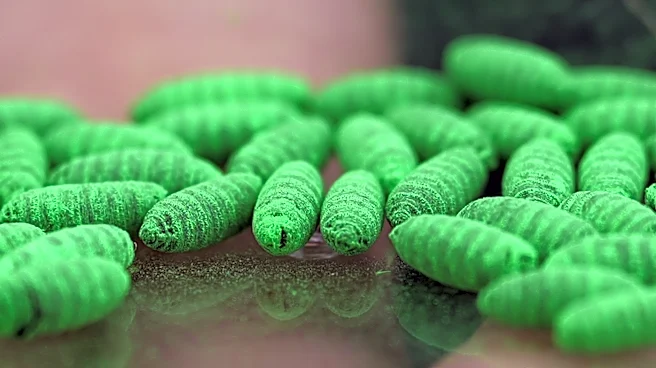
The New World screwworm, a parasitic fly eradicated from the U.S. 60 years ago, is making a comeback, posing a significant threat to the cattle industry. The U.S. Department of Agriculture confirmed the first case in a calf in South Texas, with subsequent
cases reported in Texas and New Mexico. The California Department of Food and Agriculture has implemented restrictions on animals entering the state from affected areas. Screwworm larvae feed on live flesh, causing severe wounds and potentially leading to death if untreated. Historically, the U.S. eradicated screwworms using a sterile insect technique, but the pest is now moving north from Central America.
Why It's Important?
The reemergence of screwworms threatens the already struggling U.S. cattle industry, which is experiencing its smallest herd since 1951 due to drought and high production costs. This could further increase beef prices, which have already risen by 13% over the past year. The situation is alarming for the agricultural sector, as screwworms can disrupt animal transportation and affect livestock health. The potential economic impact extends to consumers, who may face higher costs for beef products.
What's Next?
The U.S. Department of Agriculture and state agencies are likely to intensify monitoring and control measures to prevent the spread of screwworms. The agricultural industry may need to adopt additional biosecurity measures to protect livestock. There could be increased collaboration with international partners to address the northward movement of screwworms from Central America. The situation may prompt further research into pest control methods and the development of new strategies to safeguard the cattle industry.