
What's Happening?
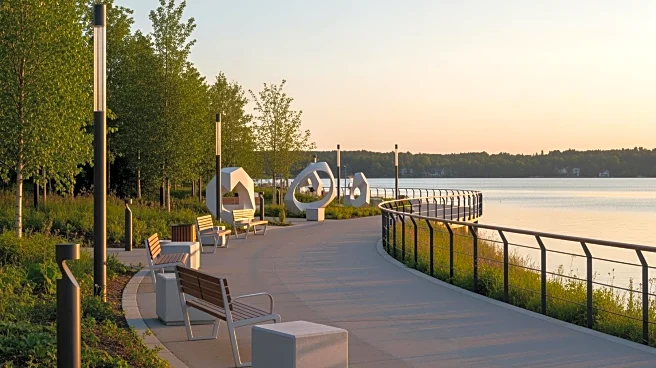
A recent study has developed a comprehensive evaluation system to assess the relationship between public space design and resident outdoor activity behavior around Qingshan Lake. The study utilized the Analytic
Hierarchy Process (AHP) to quantify evaluation elements, constructing a four-level system that includes spatial accessibility, comfort, functionality, safety, and hydrophilicity. The findings indicate that spatial functionality, comfort, and hydrophilicity are the most valued dimensions by residents, highlighting the importance of diverse activities and environmental quality in public spaces. The study emphasizes the need for well-designed public spaces to enhance resident engagement and satisfaction.
Why It's Important?
The study's findings underscore the critical role of public space design in promoting outdoor activities and improving the quality of life in urban areas. By identifying key factors that influence resident behavior, urban planners and policymakers can create more effective and inclusive public spaces. This has implications for public health, as increased outdoor activity can lead to better physical and mental well-being. Additionally, well-designed public spaces can foster community interaction and social cohesion, contributing to more vibrant and livable urban environments.
What's Next?
The insights from this study could inform future urban planning and development projects, encouraging the integration of resident preferences into public space design. Policymakers may consider revising guidelines and standards to prioritize functionality, comfort, and accessibility in public spaces. Further research could explore the specific needs of different demographic groups, ensuring that public spaces cater to diverse populations. Collaboration between urban planners, local governments, and communities will be essential to implement these findings effectively.
Beyond the Headlines
The study highlights the potential for public spaces to address broader societal challenges, such as social isolation and environmental sustainability. By promoting outdoor activities, public spaces can serve as platforms for community engagement and environmental education. The emphasis on hydrophilicity also points to the importance of integrating natural elements into urban design, which can enhance ecological resilience and biodiversity. This approach aligns with global trends towards sustainable urban development, emphasizing the need for cities to adapt to changing environmental and social conditions.