





What's Happening?
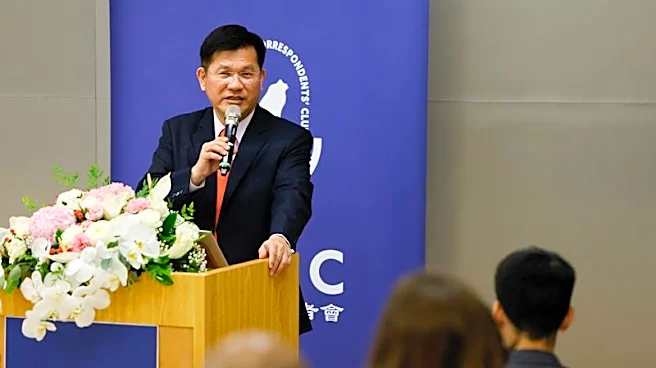
Cambodian Prime Minister Samdech Thipadei Hun Manet called on veterans across Southeast Asia to leverage their experiences from past conflicts to foster peace, reconciliation, and regional solidarity. Speaking at the 25th General Assembly of the Veterans
Federation of ASEAN Countries (VECONAC) in Phnom Penh, Prime Minister Manet emphasized that Southeast Asia's modern history, particularly after World War II and during the Cold War, was shaped by conflict. He highlighted that post-colonial nations in the region were built on the sacrifices of veterans who fought for independence and sovereignty. Prime Minister Manet described veterans as 'living witnesses of history' and guardians of national independence and territorial integrity. He stressed the importance of ensuring that the contributions of former service members are remembered and that younger generations understand the devastating consequences of war. The VECONAC General Assembly brought together delegations from ASEAN member states and Cambodian government officials under Cambodia’s rotating chairmanship.
Why It's Important?
This call from Prime Minister Manet underscores the ongoing efforts within the ASEAN region to address historical conflicts and promote lasting peace. For the U.S., a stable and peaceful Southeast Asia is crucial for its strategic interests, including trade, security, and diplomatic relations in the Indo-Pacific. The emphasis on reconciliation and regional solidarity can contribute to reducing potential flashpoints and fostering a more cooperative environment, which benefits U.S. foreign policy objectives. Furthermore, the U.S. has a significant veteran population, and the recognition of veterans' roles in nation-building and peace-keeping resonates with American values. The stability fostered by such initiatives can also create a more predictable environment for U.S. businesses operating in the region, reducing risks associated with political instability or conflict. The lessons learned from past conflicts, as highlighted by Prime Minister Manet, can offer valuable insights for global peace-building efforts, including those where the U.S. is involved.
What's Next?
Following Prime Minister Manet's address, the Veterans Federation of ASEAN Countries (VECONAC) is expected to continue its efforts to strengthen cooperation among veterans' associations in Southeast Asia. This will likely involve further initiatives to exchange experiences and promote regional solidarity among former service members. The focus will be on translating wartime lessons into actionable strategies for peace and reconciliation. Member states of ASEAN, under Cambodia's chairmanship of VECONAC, will likely explore programs that educate younger generations about the importance of peace and the consequences of conflict. This could include educational campaigns, memorial events, and platforms for inter-generational dialogue. The ongoing collaboration among ASEAN veterans could also lead to joint projects aimed at supporting veterans' welfare and integrating them further into societal development, thereby reinforcing the region's commitment to stability and shared prosperity.
Beyond the Headlines
The initiative to transform veterans' wartime experiences into lessons for peace carries profound ethical and cultural implications. It acknowledges the often-overlooked psychological and social impact of conflict on individuals and communities, positioning veterans not merely as symbols of past struggles but as active agents of future reconciliation. This approach can help destigmatize the experiences of former combatants and integrate them more fully into civil society, fostering a sense of purpose beyond military service. Culturally, it promotes a narrative of resilience and healing, shifting focus from glorifying war to valuing peace and understanding its fragility. This long-term shift could influence regional educational curricula, public discourse, and even artistic expressions, embedding a deeper appreciation for peace and the human cost of conflict. Such a framework could also serve as a model for other regions grappling with post-conflict reconciliation, highlighting the universal value of learning from history to prevent future strife.