
What's Happening?
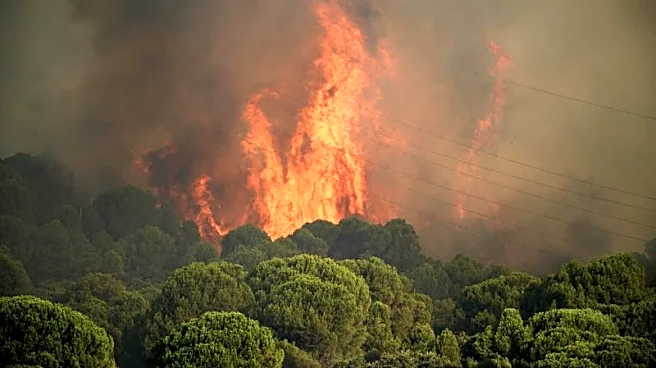
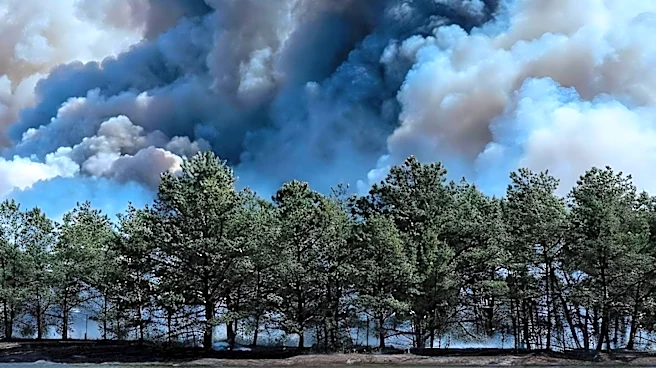
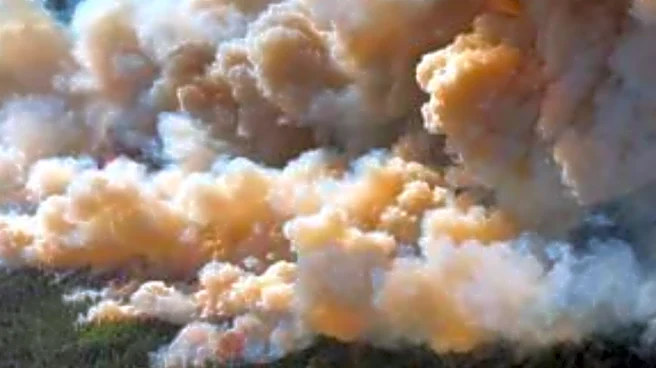
Spain has declared a national emergency due to uncontrollable wildfires threatening major cities, including Madrid. The fires, fueled by extreme heat and drought conditions, have led to mass evacuations,
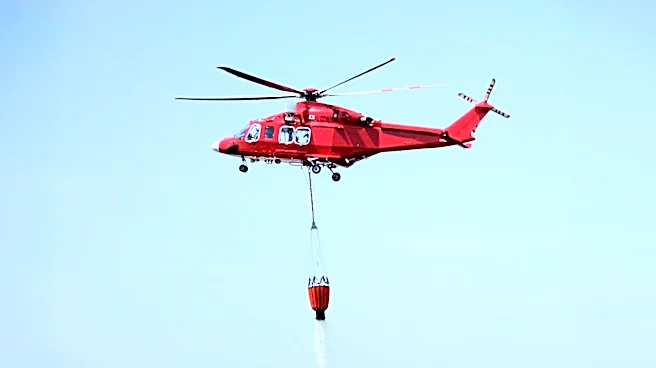
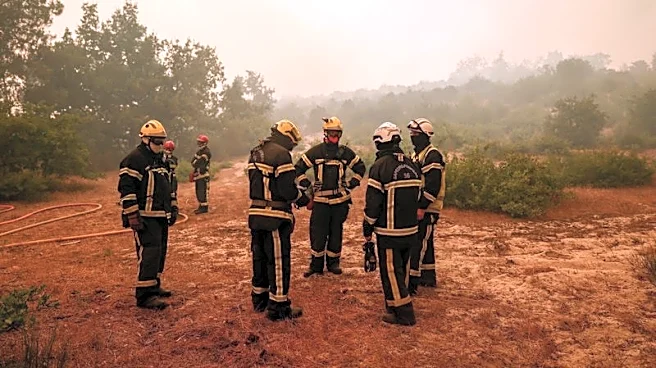
with around 200,000 people displaced in the Bordeaux region of France. In Spain, the government has requested assistance from the European Union, receiving specialist water-bombing planes to aid in firefighting efforts. The situation is dire, with authorities admitting they lack the capacity to contain the fires, which have already devastated areas like Cebreros.
Why It's Important?
The declaration of a national emergency in Spain underscores the severity of the wildfires and the strain on national resources. This crisis highlights the broader implications of climate change, as extreme weather events become more frequent and intense. The inability to control the fires poses significant risks to public safety, infrastructure, and the environment. The international response, including EU assistance, emphasizes the need for coordinated efforts to address climate-related disasters and support affected nations.
What's Next?
Spain and France will likely continue to rely on international support to manage the ongoing crisis. The focus will be on containing the fires and preventing further damage to populated areas. In the long term, these events may prompt European governments to accelerate climate action plans and invest in resilient infrastructure. The recovery process will involve rebuilding communities and addressing the environmental impact of the fires, which could take years to fully resolve.