





What's Happening?
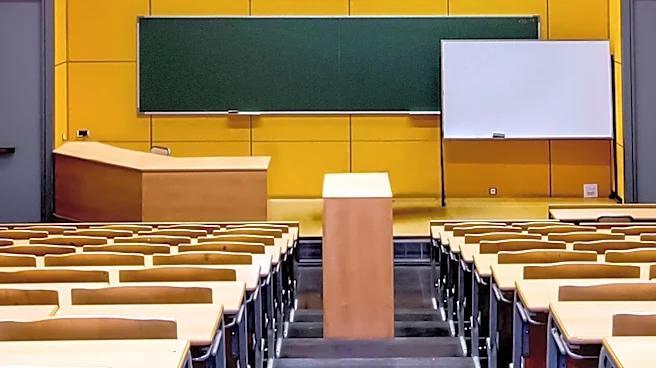
Students at Blevins Middle School in Northern Colorado staged a walkout to protest the school district's plan to close their school. The demonstration occurred ahead of a final vote on the closure, which is scheduled to take place later this month. The students'
action highlights significant community opposition to the proposed closure, indicating strong feelings among those directly affected by the decision. This protest is a direct response to the district's plans, aiming to draw attention to their concerns and potentially influence the upcoming vote. The walkout represents a collective effort by the student body to voice their disapproval and advocate for the continuation of their school.
Why It's Important?
This student walkout is important as it demonstrates the power of youth activism in local governance and education policy. School closures often have profound impacts on communities, affecting not only students and staff but also local economies and social structures. The protest underscores the emotional and practical consequences of such decisions, bringing to light the voices of those who will be most directly impacted. It also highlights potential issues with community engagement in decision-making processes, suggesting that the district's plans may not have adequately considered the perspectives of all stakeholders. The outcome of the final vote will set a precedent for how student and community dissent is addressed in future educational policy decisions.
What's Next?
The immediate next step is the final vote by the school district on the proposed closure of Blevins Middle School, scheduled for later this month. The student walkout and any subsequent community actions could influence this vote, potentially leading to a reconsideration or delay of the closure. If the closure proceeds, students and parents may explore further avenues of protest, legal challenges, or appeals to higher educational authorities. Conversely, if the district reverses its decision, it could lead to a re-evaluation of its school consolidation strategies and a more inclusive approach to future planning. The situation will likely continue to be a focal point for local news and community discussion.
Beyond the Headlines
Beyond the immediate issue of school closure, this event touches upon broader themes of educational equity, community identity, and the role of public institutions in serving their constituents. School closures can exacerbate inequalities, particularly in underserved areas, by disrupting established support networks and increasing travel burdens for students. The protest also reflects a growing trend of young people actively engaging in civic discourse and advocating for their rights and interests. This situation could serve as a case study for how school districts balance financial considerations with community needs and student well-being, prompting a re-examination of criteria used for school closures and the importance of transparent, participatory decision-making processes.