







What's Happening?
A Jamaican delegation is set to file a petition addressed to King Charles III during a visit to the United Kingdom, seeking legal guidance on the issue of slavery reparations. This marks the first instance of a British Commonwealth state utilizing this
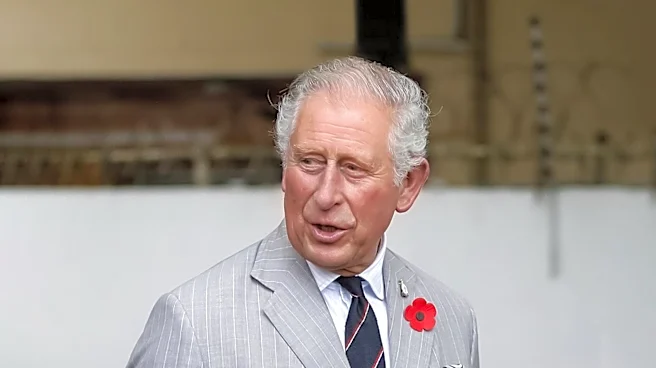
legal avenue for reparatory justice. The delegation, led by Jamaica’s Minister of Culture, Gender, Entertainment and Sport, Olivia Grange, aims to advance Jamaica’s push for reparations for African ancestors who endured centuries of enslavement. The petition will ask King Charles III, who is Jamaica’s head of state, to refer three specific questions regarding the transatlantic slave trade to the Judicial Committee of the Privy Council, which serves as the Caribbean island’s highest court of appeal and is based in London. These questions concern the legality of African enslavement in Jamaica under English common law, its compliance with international law, and the UK's potential legal obligation to provide remedies for the harm caused by slavery. Additionally, the ministry plans to meet with the British Museum to discuss the repatriation of cultural artifacts taken from Jamaica.
Why It's Important?
This initiative by Jamaica represents a significant development in the global movement for slavery reparations, particularly as it targets a direct legal and monarchical route within the UK system. The petition's focus on obtaining an advisory opinion from the Judicial Committee of the Privy Council could set a precedent for other former British colonies seeking similar redress. If the court provides an opinion that acknowledges legal obligations or historical injustices, it could significantly alter the discourse around reparations, potentially leading to increased pressure on the UK government to engage in more substantive discussions or actions. The UK has historically refused to pay for historical slavery, despite having paid compensation to slave owners after abolition. The outcome of this petition could influence international legal interpretations of historical injustices and the responsibilities of former colonial powers, impacting diplomatic relations and potentially inspiring similar claims from other nations.
What's Next?
Following the filing of the petition, the immediate next step will be for King Charles III to consider referring the questions to the Judicial Committee of the Privy Council. While a Buckingham Palace spokesperson acknowledged the King’s constitutional role, they clarified that he has no part in determining the substance of the claim. Minister Olivia Grange has stated that she will not speculate on whether Jamaica is directly asking the UK for monetary reparations, emphasizing that the next steps will be determined once responses to the questions are received. The delegation's meetings with the British Museum regarding the repatriation of cultural artifacts will also be closely watched, as this represents another facet of addressing colonial-era injustices. The legal process, if initiated, could be lengthy and complex, with potential for significant debate and scrutiny from legal scholars, human rights organizations, and international bodies. The outcome could influence future diplomatic engagements between the UK and Commonwealth nations.
Beyond the Headlines
The Jamaican petition delves into profound ethical and historical dimensions, challenging the long-standing narrative surrounding the British Empire's role in the transatlantic slave trade. By questioning the legality of enslavement under English common law and international law, Jamaica is not only seeking reparations but also a re-evaluation of historical justice and accountability. The petition highlights the enduring legacy of slavery, which continues to impact socio-economic structures and racial inequalities in former colonies. The UK's payment of compensation to slave owners, rather than the enslaved, after abolition in 1833, underscores a historical injustice that continues to resonate. This move could trigger broader discussions about the moral responsibilities of nations for historical wrongs and the potential for restorative justice. It also brings to the forefront the role of monarchies in addressing historical grievances, potentially influencing how other nations with similar colonial pasts approach their former imperial powers.