



What's Happening?
Former Minister of Public Works, Edgar Montaño, from the government of Luis Arce, has had his house arrest revoked and will return to San Pedro prison for an additional two months. This decision was made by the Second Criminal Chamber of the Departmental
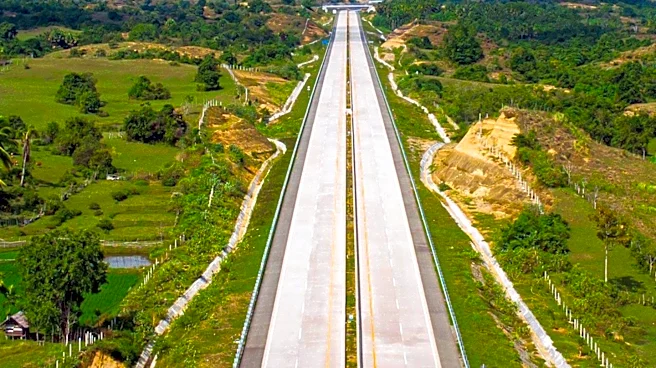
Court of Justice of La Paz during an appeal hearing. Montaño was initially apprehended on January 9 of this year on charges of embezzling public funds related to the construction of the El Sillar section of the Cochabamba-Santa Cruz highway. He was granted substitute measures to preventive detention on April 30, but a second case for the same project, involving different charges, led to his re-imprisonment for another six months. The Public Prosecutor's Office, along with other state entities, advocated for the extension of his detention, arguing against the previously granted house arrest. The court has scheduled a legal status verification hearing for December 30, 2026.
Why It's Important?
This development highlights ongoing efforts by the Bolivian government to combat corruption within public infrastructure projects. The case against former Minister Montaño, involving alleged irregularities and economic damage exceeding $425 million in the El Sillar project, underscores the significant financial implications of such corruption. The revocation of his house arrest, despite previous grants of substitute measures, signals a firm stance by judicial authorities and the Public Prosecutor's Office against individuals accused of misusing public funds. This could set a precedent for future corruption cases, indicating a stricter approach to preventive detention and a reduced likelihood of leniency for high-profile officials. The continued legal proceedings and the substantial alleged economic damage could impact public trust in government projects and potentially influence future oversight mechanisms for large-scale infrastructure developments.
What's Next?
Montaño will remain in San Pedro prison for at least two more months, with a legal status verification hearing scheduled for December 30, 2026. This hearing will determine the next steps in his legal process, potentially leading to further extensions of preventive detention or a re-evaluation of his custodial measures. The ongoing investigation into the El Sillar project, which includes alleged irregularities in contract extensions, modifications to the original route, and structural failures, is expected to continue. The Public Prosecutor's Office and other state entities will likely maintain their assertive stance in court, pushing for accountability in cases of alleged economic damage and official misconduct. The outcome of this case could influence public perception of the current administration's commitment to transparency and anti-corruption efforts.
Beyond the Headlines
The persistent legal challenges faced by former Minister Montaño, particularly the repeated revocations of his house arrest, suggest a deeper struggle within the Bolivian justice system regarding the treatment of high-ranking officials accused of corruption. The involvement of the Public Prosecutor's Office and multiple state entities in advocating for his continued detention indicates a coordinated effort to ensure accountability. This case also touches upon the broader issue of infrastructure development and the potential for corruption in large-scale projects, which can lead to significant economic losses and compromised public services. The alleged sale of preferential dollars to the construction company during a period of dollar scarcity further complicates the matter, hinting at systemic issues beyond individual misconduct. The legal battle surrounding Montaño could serve as a critical test case for the independence and effectiveness of Bolivia's anti-corruption institutions.