








What's Happening?
Investors and scientists are undertaking a significant project to restore a 23-square-mile tract of peatland in North Carolina's Inner Banks. This initiative aims to reduce climate-warming carbon dioxide emissions and regenerate native habitats. Decades
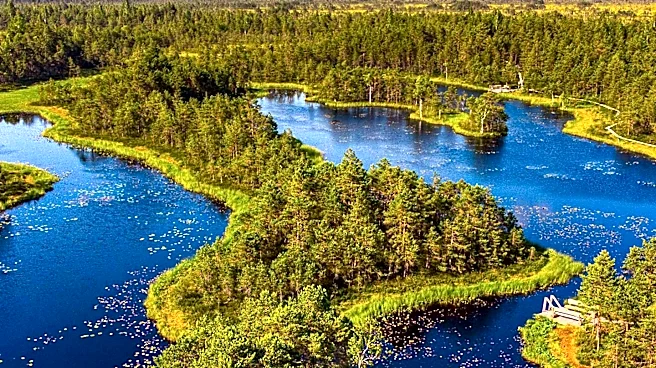
ago, 50 miles of ditches were dug for an abandoned farming venture, which drained much of the water from thousands of years of accumulated peat. This drainage left the site vulnerable to drought and wildfires, altered native habitats, and caused it to emit 130,000 tons of carbon dioxide annually. Colorado-based Pantheon Regeneration plans to restore its property by blocking off ditches to control the water table, which is expected to significantly reduce carbon dioxide emissions. Following this, invasive species will be culled, and native grasses, flowers, and other plants will be replanted. Peatlands, though only accounting for 3% of the global land surface, store about one-third of the Earth’s carbon dioxide, more than all forests combined. However, when degraded or destroyed, they release large volumes of greenhouse gases, contributing approximately 6% of the annual global total from all sources.
Why It's Important?
The restoration of peatlands in North Carolina holds significant importance for environmental conservation and climate change mitigation efforts in the U.S. Peatlands are crucial natural carbon sinks, and their degradation contributes substantially to greenhouse gas emissions. The project by Pantheon Regeneration demonstrates a private sector-led approach to addressing climate change, potentially setting a precedent for similar initiatives across the country. By restoring these peatlands, the project not only aims to reduce carbon emissions but also to regenerate vital native habitats, enhance biodiversity, and improve water management. Intact peatlands store about 10% of global fresh water, help control flooding, and can mitigate wildfires, all of which are critical benefits for the U.S., particularly in regions susceptible to these environmental challenges. The success of this project could provide a scalable model for other threatened peatland areas along the Eastern Seaboard, which are among the most vulnerable globally.
What's Next?
Pantheon Regeneration plans to sell carbon credits generated from the restored peatlands to technology companies and other corporations seeking to offset their greenhouse gas emissions. The revenue from these carbon credits will then be reinvested to restore and preserve an ambitious one million acres of peatland from Virginia to northern Florida over the next decade. This business model aims to create a sustainable funding mechanism for large-scale environmental restoration. The project will involve ongoing monitoring of carbon dioxide emission reductions, water table levels, and the recovery of native flora and fauna. The success of this initial phase in North Carolina will be crucial in demonstrating the viability and effectiveness of this approach, potentially attracting more investors and corporate partners to expand the initiative. Future steps will also likely involve collaboration with local communities and environmental organizations to ensure long-term sustainability and community engagement.
Beyond the Headlines
This peatland restoration project highlights a growing trend of market-based solutions to environmental challenges, where private investment and carbon credit markets play a central role in conservation efforts. The initiative underscores the economic value of natural ecosystems, transforming them from passive environmental assets into active components of the carbon economy. It also brings to light the often-overlooked importance of peatlands, which are critical for global carbon sequestration but are frequently degraded due to human activities like agriculture and development. The project's focus on the Eastern Seaboard's threatened peatlands points to a broader ecological vulnerability in the U.S. and the need for comprehensive strategies to protect these unique environments. Furthermore, the involvement of tech companies as buyers of carbon credits signifies a shift in corporate responsibility, where companies are increasingly looking to invest in tangible environmental projects to meet their sustainability goals, moving beyond mere compliance to active ecological stewardship.