






What's Happening?
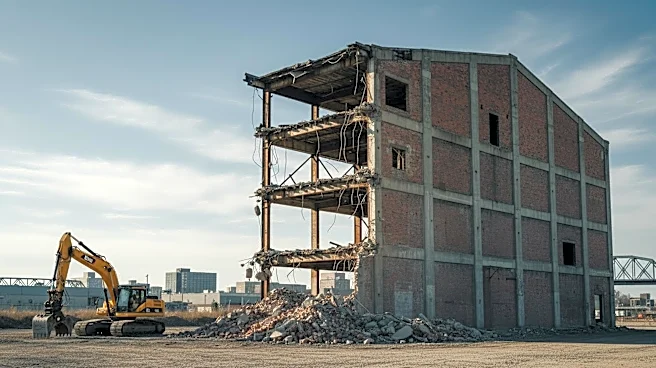
The demolition of the Centennial Mills warehouse in Portland, Oregon, is proceeding ahead of schedule, with onlookers gathering to watch the building's dismantling. The abandoned warehouse, which suffered fire damage on August 2, was deemed at risk of collapse,
prompting the city to initiate demolition within two weeks. The process began with controlled detonations to bring down the water tower, followed by the removal of the walls. However, the demolition has not been without incident. Amber Leigh, owner of Crystal DeLuLu, a nearby business, reported significant damage to her shop during the water tower's demolition. She stated that multiple items fell from her walls, merchandise was broken, and a 'wicked hot air' blast entered her store, claiming the city failed to warn her adequately.
Why It's Important?
The accelerated demolition of Centennial Mills highlights the critical need for rapid response to structural hazards in urban environments, especially after events like fires. However, the reported damage to a nearby business underscores the potential for unintended consequences and the importance of comprehensive safety protocols and communication during such operations. This incident raises questions about the adequacy of the safety perimeter, which Portland Fire & Rescue, in consultation with an engineer, determined to be 'a minimum of 1.5 times the building height.' The financial burden on small businesses like Crystal DeLuLu, which may incur losses from damaged merchandise and potential operational disruptions, can be substantial. It also brings to the forefront the issue of municipal responsibility for damages caused by city-sanctioned activities.
What's Next?
The city of Portland has acknowledged reports of nearby windows being damaged and stated it is 'continuing to monitor the situation.' Amber Leigh is asserting that the city should be '100% responsible' for the damages to her business, suggesting a potential claim for compensation. This situation will likely lead to further investigation into the communication protocols and safety measures implemented during the demolition. The outcome could influence future demolition projects in urban areas, potentially leading to stricter guidelines for notifying and protecting adjacent businesses and properties. The incident may also prompt a review of how cities assess and mitigate risks to surrounding areas during controlled demolitions, especially concerning blast effects and debris containment.
Beyond the Headlines
This event touches upon the broader implications of urban renewal and infrastructure projects on local communities and small businesses. While the demolition of a hazardous structure is a necessary public safety measure, the impact on neighboring establishments can be profound and often overlooked. The lack of direct communication with affected businesses, as alleged by Amber Leigh, points to a potential gap in community engagement strategies during critical urban operations. This incident could spark a wider discussion on the ethical responsibilities of municipal authorities to protect local economies and ensure equitable treatment for all stakeholders during large-scale public works. It also highlights the vulnerability of small businesses to unforeseen external events and the importance of robust insurance and support mechanisms for such enterprises.