




What's Happening?
President Trump, who is approaching his 80th birthday, recently underwent a physical examination at Walter Reed National Military Medical Center. His physician, Dr. Sean Barbabella, reported that Trump is in 'excellent health' and fit to perform his duties
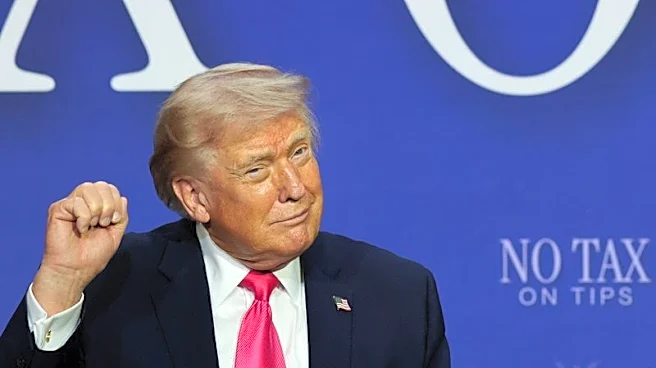
as Commander-in-Chief. Despite this, concerns have been raised about his health due to visible symptoms such as bruising on his hand, rashes on his neck, swollen ankles, and difficulty walking in straight lines. These concerns were exacerbated by his week-long absence from public appearances following the physical exam. Dr. Jonathan Reiner, a cardiologist, has called for the White House to allow Trump's physician to address the press to clarify these health concerns. The White House has dismissed these calls, labeling them as politically motivated.
Why It's Important?
The health of a sitting president is of significant public interest, as it directly impacts their ability to govern effectively. President Trump's health has been a topic of scrutiny, especially given his age and the visible symptoms reported. The lack of transparency and his absence from public view have fueled speculation and concern among the public and political figures. This situation highlights the importance of transparency in matters of presidential health, as it can affect public confidence and the stability of governance. The White House's response to these concerns, dismissing them as politically motivated, may further polarize public opinion and raise questions about the administration's handling of health disclosures.
What's Next?
It remains to be seen whether the White House will heed calls for greater transparency regarding President Trump's health. If the administration continues to withhold detailed health information, it may face increased pressure from both the public and political opponents. This could lead to further scrutiny and demands for accountability. Additionally, President Trump's upcoming public appearances and activities will be closely watched for any signs of health issues, which could influence public perception and political dynamics.