
What's Happening?
Britain's High Court has ruled that the government's decision to classify the protest group Palestine Action as a terrorist organization was unlawful. The ruling came after the group was banned following
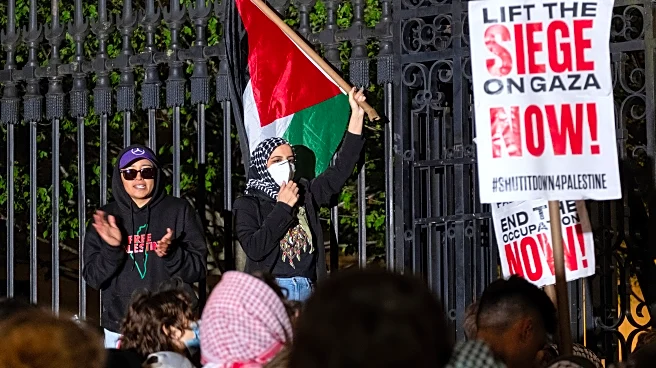
a protest at a Royal Air Force base against British military support for Israel's offensive in Gaza. The court found that the activities of Palestine Action did not meet the criteria for proscription as a terrorist organization. Despite the ruling, the ban remains in place pending a further hearing, as the government prepares to appeal the decision. The court's decision has been hailed by civil liberties groups as a victory for free speech and the right to protest.
Why It's Important?
The ruling is significant as it challenges the use of antiterror legislation to suppress protest groups, raising questions about the balance between national security and civil liberties. The decision could impact how similar cases are handled in the future, potentially affecting the legal framework surrounding protest and free speech in the UK. The government's response, including its intention to appeal, indicates ongoing tensions between state security measures and individual rights. This case also highlights the broader geopolitical context, as it involves protests against military actions in the Middle East, reflecting the complex interplay between domestic policy and international relations.
What's Next?
The government plans to appeal the High Court's decision, which means the legal battle over the status of Palestine Action is likely to continue. A further hearing is scheduled, and the outcome could set a precedent for how protest groups are treated under UK law. Meanwhile, the police have stated they will not arrest individuals for supporting Palestine Action but will continue to monitor activities for potential legal action. The case may also prompt discussions within the UK about the appropriate use of antiterror laws and the protection of civil liberties.