







What's Happening?
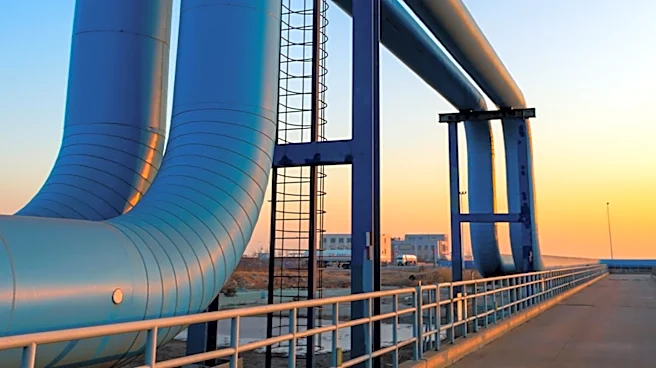
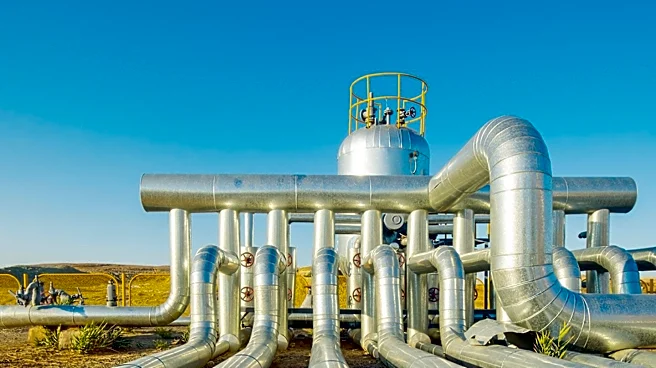
Turkey and Iraq have reached an agreement to extend an expired oil pipeline deal by one year, allowing continued crude oil exports through the Kirkuk-Ceyhan pipeline. This pipeline, which stretches 986 kilometers from Kirkuk to Turkey's Mediterranean
port of Ceyhan, bypasses the Strait of Hormuz, a critical route often affected by geopolitical tensions. The interim agreement secures a reserved export capacity of up to 750,000 barrels per day, contingent on security improvements and infrastructure developments in Iraq. The Turkish Energy Ministry has not commented on the deal, but Turkish Energy Minister Alparslan Bayraktar confirmed the flow capacity. This extension follows a history of disruptions, including a legal dispute resolved by the International Court of Arbitration, which ordered Turkey to pay Iraq $1.5 billion for unauthorized oil shipments.
Why It's Important?
The extension of the pipeline deal is significant for global oil markets, particularly in light of disruptions caused by conflicts in the Middle East. By securing a stable export route, the agreement helps mitigate risks associated with the Strait of Hormuz, a chokepoint for global oil shipments. This development is crucial for Iraq, which relies heavily on oil exports for revenue, and for Turkey, which benefits from transit fees and energy security. The deal also reflects ongoing geopolitical dynamics, as Turkey and Iraq navigate complex regional relationships and economic dependencies. The agreement may influence oil prices and market stability, impacting stakeholders from oil companies to consumers.
What's Next?
Future developments may include increased oil flows if security conditions improve and infrastructure projects are completed. The construction of a new pipeline from Basra to Kirkuk could further enhance Iraq's export capacity. Additionally, the resolution of legal disputes and continued negotiations between Turkey and Iraq may lead to more comprehensive agreements. Stakeholders, including international oil companies and regional governments, will likely monitor the situation closely, as any changes could affect global oil supply chains and market dynamics.