







What's Happening?
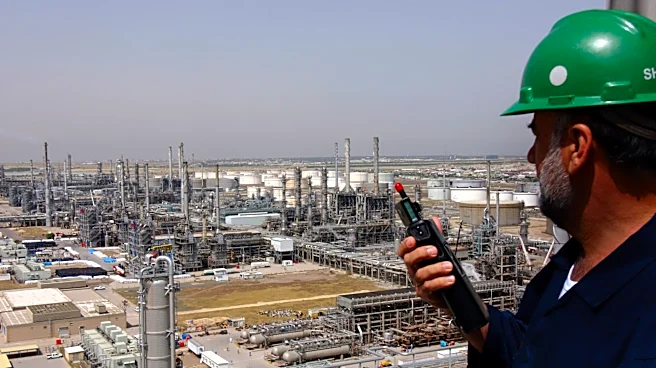
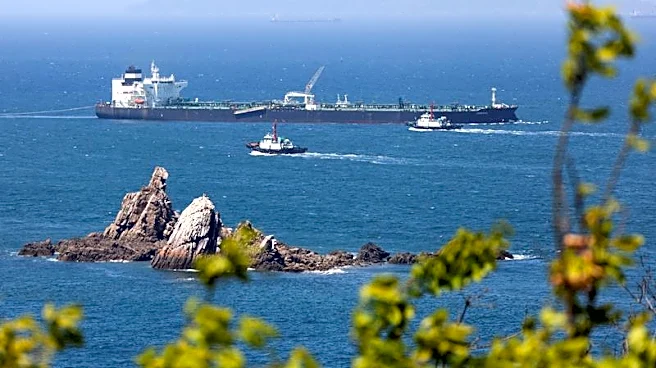
Iraq has successfully increased oil production from three major projects in its southern region, reaching full capacity as tankers begin to export cargoes. This development follows an order from the state-run Basra Oil Co. to boost output at the West
Qurna 1, North Rumaila, and Artawi fields. The decision comes after a period of fluctuating production levels due to the erratic reopening of the Strait of Hormuz, which had previously hindered tanker loadings and led to full storage tanks. The recent increase in production is part of Iraq's efforts to catch up with its Gulf neighbors, such as the United Arab Emirates and Saudi Arabia, which have already restored their oil exports to prewar levels or are nearing that point.
Why It's Important?
The resumption of full-capacity oil production in Iraq is significant for the global oil market, as it contributes to stabilizing supply levels. This move is particularly important given the recent disruptions in the Strait of Hormuz, a critical chokepoint for global oil shipments. By increasing its output, Iraq aims to enhance its competitive position in the oil market, potentially influencing global oil prices. The ability to export more oil could also bolster Iraq's economy, providing much-needed revenue. Additionally, the involvement of international companies like TotalEnergies SE in facilitating the export of Iraqi crude to Asia underscores the strategic importance of Iraq's oil resources in meeting global energy demands.
What's Next?
As Iraq continues to ramp up its oil production, the focus will likely shift to maintaining stable export levels and ensuring that logistical challenges, such as those previously experienced in the Strait of Hormuz, are managed effectively. The Iraqi government and Basra Oil Co. may also explore further collaborations with international oil companies to enhance production efficiency and market reach. Additionally, the global oil market will be closely monitoring Iraq's production levels, as any changes could impact oil prices and supply dynamics. Stakeholders, including other oil-producing nations and international energy companies, will be keen to see how Iraq's increased output affects their own market strategies.