



What's Happening?
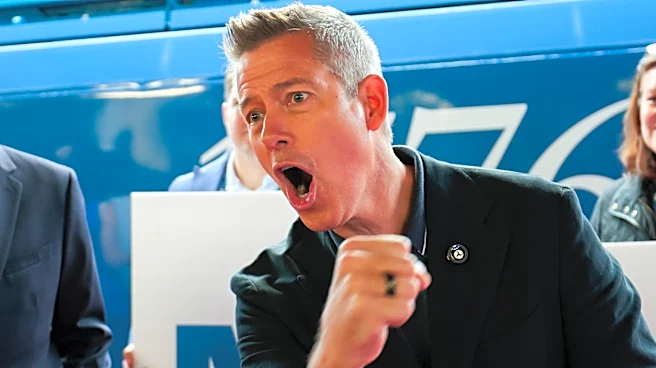
U.S. Senator Kevin Cramer (R-N.D.) has announced his intention to block future President Trump nominees until the administration addresses a federal wetlands rule that he claims infringes upon farmers' private property rights. Senator Cramer asserts that the 2024
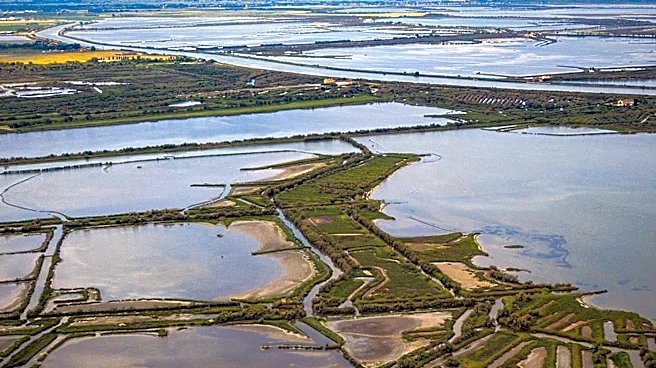
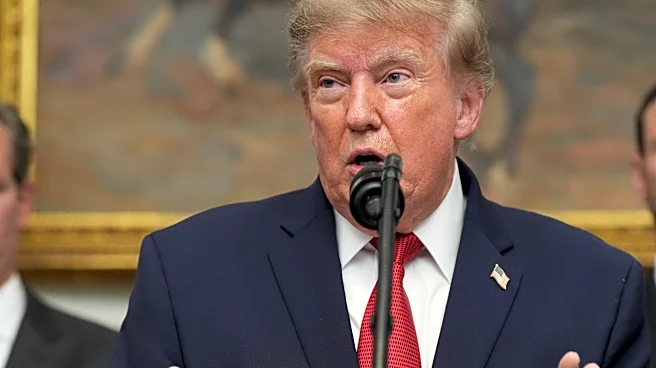
rule, which he describes as a 'left-wing, environmentalist extremist dream rule,' creates excessive setbacks for drain tile from wetland easements. These easements are private lands purchased by the U.S. Fish and Wildlife Service (FWS) to protect habitat. The issue is particularly critical in North Dakota, which encompasses a significant portion of the Prairie Pothole Region, a vital habitat for ducks and geese. Cramer recently spoke with President Trump about the matter, who reportedly indicated he would contact Interior Secretary and former North Dakota Governor Doug Burgum, as FWS is part of the Interior Department. The FWS recently stated that 'no further action is planned' after reviewing over 200,000 public comments on the rule.
Why It's Important?
Senator Cramer's threat to block presidential nominees highlights a significant point of contention between agricultural interests and environmental regulations within the federal government. This action could disrupt the Senate's business, especially as the chamber is in recess until September 14, and Cramer has already placed a hold on every pending nominee. The dispute underscores the challenges faced by farmers in the Prairie Pothole Region, who, according to Ryan Wanzek, a local farmer, are receiving conflicting guidance from different federal agencies within the same administration regarding drain tile setbacks. The outcome of this standoff could influence future environmental policy, particularly concerning wetlands and agricultural land use, and may set a precedent for how senators leverage their power to influence administrative decisions. It also brings to light the ongoing debate about balancing conservation efforts with private property rights and economic viability for farmers.
What's Next?
Senator Cramer's immediate next step is to maintain his hold on all pending President Trump nominees, which will cause significant disruption to the Senate's confirmation process upon its return. He has urged the administration to re-evaluate the public comments on the wetlands rule and 'pull the pause off of the action,' implying a desire for a more definitive resolution or reversal of the rule. The FWS's current stance of 'no further action is planned' suggests a potential stalemate, requiring intervention from higher levels of the administration, possibly from Interior Secretary Burgum as President Trump indicated. If a resolution is not reached, Cramer suggested that a class-action lawsuit by farmers might become necessary. The North Dakota Wildlife Federation, however, supports the rule, arguing it protects habitat and ensures compliance for landowners, indicating a broader, ongoing debate with diverse stakeholders.
Beyond the Headlines
This dispute extends beyond a simple regulatory disagreement, touching upon the broader philosophical divide between environmental protection and economic development, particularly in agricultural regions. The characterization of the rule as 'left-wing, environmentalist extremist' by Senator Cramer reflects a deep-seated ideological conflict that often surfaces in debates over land use and natural resource management. The differing interpretations of 'wetland easements' – whether they are vital habitats or unproductive 'white, salty soils' – underscore the complex scientific and economic considerations at play. This situation also highlights the intricate relationship between federal agencies, state interests, and local communities, where national policies can have profound and sometimes contradictory impacts on the ground. The resolution of this conflict could influence how future administrations approach environmental regulations, especially in states with significant agricultural and natural resource industries.