








What's Happening?
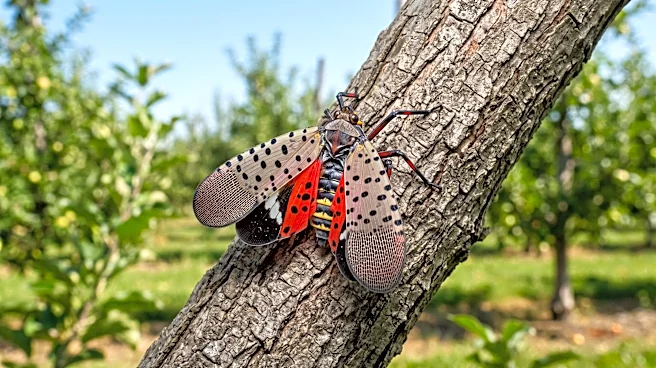
Representative Jim McGovern, a Democrat representing central Massachusetts, is calling for a coordinated federal effort and adequate funding from the USDA to combat the invasive spotted lanternfly. This insect, native to Asia, first appeared in Pennsylvania
12 years ago and has since spread to Massachusetts, including the Boston area. McGovern highlighted the severe impact these pests have, particularly on fruit trees, stating they can 'eradicate entire farms.' State officials are urging residents to actively kill the insects and destroy their egg masses, which can survive winter temperatures. Methods suggested include squishing, vacuuming, or using chemical treatments, and scraping egg masses into alcohol or soapy water. The bugs do not pose a direct health risk to humans but are highly destructive to plant life, threatening agricultural ecosystems.
Why It's Important?
The spread of the spotted lanternfly poses a significant threat to the agricultural sector in Massachusetts and potentially other U.S. regions. Its ability to destroy fruit trees and damage grape crops and vegetable gardens could lead to substantial economic losses for farmers and an increase in food prices for consumers. The call for a coordinated federal response underscores the understanding that state-level actions alone are insufficient to contain such an aggressive invasive species. Without a comprehensive strategy and federal funding, the long-term viability of certain agricultural industries could be jeopardized, impacting local economies and food supply chains. The issue also highlights the broader challenge of managing invasive species and the need for proactive measures to protect biodiversity and agricultural resources across the nation.
What's Next?
The immediate next steps involve continued public awareness campaigns and active eradication efforts by Massachusetts residents and agricultural departments. Rep. McGovern's advocacy suggests that further discussions and legislative efforts will likely be pursued to secure federal funding and establish a more robust, coordinated strategy with the USDA. This could involve increased research into effective control methods, broader surveillance programs, and financial aid for affected farmers. The success of these efforts will depend on the collaboration between state and federal agencies, as well as public participation in controlling the pest's spread. The long-term goal will be to mitigate the economic and ecological damage caused by the spotted lanternfly and prevent its further proliferation into new areas.
Beyond the Headlines
Beyond the immediate agricultural and economic concerns, the spotted lanternfly invasion points to larger ecological and environmental challenges facing the U.S. The introduction of non-native species can disrupt delicate ecosystems, leading to cascading effects on native plant and animal life. This situation also raises questions about global trade and travel's role in facilitating the spread of invasive species, necessitating stricter biosecurity measures. The emphasis on public involvement in eradication efforts highlights a growing trend of citizen science and community engagement in environmental protection. Furthermore, the need for federal intervention underscores the interconnectedness of regional environmental issues and the necessity of national-level strategies to address threats that transcend state borders, potentially influencing future policy on environmental protection and agricultural support.