






What's Happening?
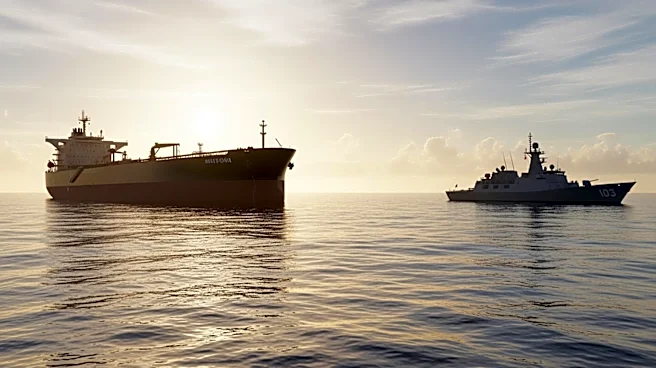
The United States has conducted a maritime interdiction of a stateless tanker in the Indian Ocean, identified as the Davina, which was reportedly attempting to conceal its location approximately 20 miles southwest of Sri Lanka. The U.S. Indo-Pacific Command
(INDOPACOM) reported the boarding of the vessel, which has been involved in transporting Iranian crude oil. The tanker, also known as Lenore in some databases, has been sanctioned by the U.S. since October 2024 for its involvement in the Iranian oil trade. The vessel, built in 2004, has been falsely claiming registries in Curacao and Palau. According to TankerTrackers.com, the Davina is currently carrying 1.9 million barrels of Iranian crude oil, having loaded at Kharg Island on March 20. This operation marks the third seizure of a stateless tanker by INDOPACOM since mid-April, following the interdictions of the Tifani and Majestic X.
Why It's Important?
This interdiction underscores the U.S. commitment to enforcing sanctions against Iran, particularly in the maritime domain. By intercepting vessels like the Davina, the U.S. aims to disrupt illicit networks and prevent the flow of Iranian oil, which is a significant source of revenue for Iran. The operation highlights the strategic importance of maritime enforcement in maintaining international sanctions and the broader geopolitical tensions surrounding Iran's oil exports. The seizure of such tankers also serves as a warning to other vessels attempting to evade sanctions by using false registries or operating statelessly. This action could impact global oil markets by tightening the supply of Iranian oil, potentially affecting oil prices and international trade dynamics.
What's Next?
The U.S. is likely to continue its maritime enforcement operations in the region, focusing on intercepting vessels involved in the Iranian oil trade. This could lead to increased tensions between the U.S. and Iran, as well as with countries that may be indirectly involved in facilitating these shipments. The ongoing interdictions may prompt Iran to seek alternative routes or methods to export its oil, potentially involving more sophisticated evasion tactics. Additionally, the U.S. may face diplomatic challenges with countries whose flags are falsely claimed by these vessels, necessitating international cooperation to address the issue of stateless shipping and false registries.