




What's Happening?
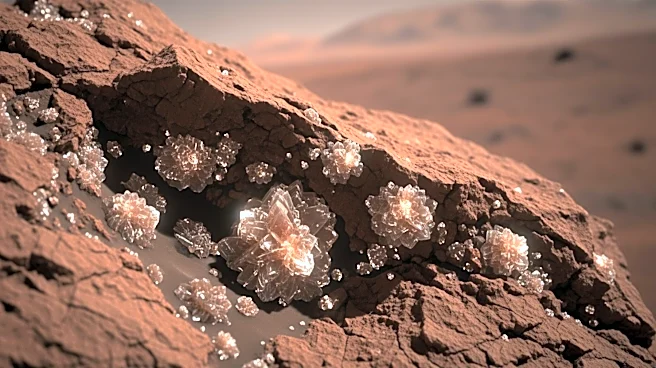
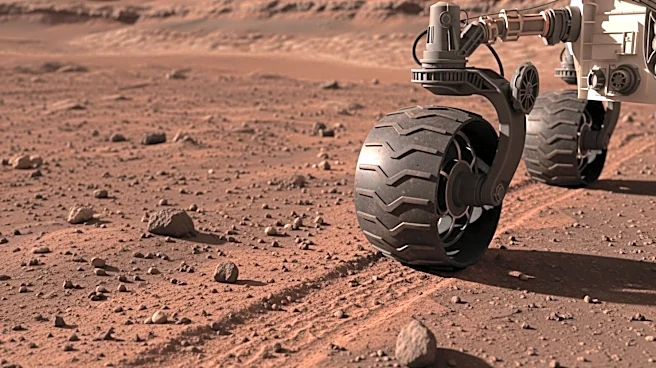
NASA's Curiosity Rover has discovered a diverse collection of organic molecules on Mars, specifically from a rock sample named 'Mary Anning 3' collected in 2020. This sample, taken from Mount Sharp, contained 21 carbon-containing molecules, seven of which
were detected for the first time on Mars. These findings suggest that ancient Mars had the right chemistry to support life, although it remains unclear whether these molecules were formed through biological or geological processes. The presence of clay minerals in the area, which are known for preserving organic compounds, has helped protect these molecules from the harsh Martian environment, including radiation exposure over billions of years.
Why It's Important?
The discovery of these organic molecules is significant as it strengthens the hypothesis that Mars once had conditions suitable for life. The presence of nitrogen heterocycles, which are precursors to RNA and DNA, suggests that the building blocks of life could have existed on Mars. This finding contributes to our understanding of the potential for life beyond Earth and the history of Mars as a planet that may have once harbored life. It also highlights the importance of continued exploration and study of Mars to uncover more about its past and the possibility of life elsewhere in the universe.
What's Next?
Future missions to Mars, including those equipped with advanced analytical tools, will continue to explore the planet's surface and subsurface to gather more data on its geological and chemical history. These missions aim to further investigate the presence of organic molecules and other signs of past life. The European Space Agency's Rosalind Franklin rover and NASA's Dragonfly mission to Saturn's moon Titan are examples of upcoming missions that will employ similar techniques to study organic compounds in different environments, potentially offering more insights into the conditions necessary for life.