






What's Happening?
Senate Minority Leader Chuck Schumer's office is facing accusations of installing out-of-state campaign staff in Maine's U.S. Senate race, aiming to neutralize the populist strengths of nominee Troy Jackson. Following Jackson's unexpected win of the nomination
to replace Graham Platner, Schumer's team reportedly took over the campaign, despite Jackson's previous declaration that he would not support Schumer for Democratic leader if elected. Critics suggest these operatives, described as having a history of losing elections and lacking knowledge of Maine, are attempting to mold Jackson into a more generic Democrat. This intervention is seen as potentially hindering Jackson's ability to connect with local voters and leverage his grassroots support, which is crucial in a state like Maine.
Why It's Important?
This situation highlights a significant internal struggle within the Democratic Party regarding candidate autonomy versus party control, particularly in competitive Senate races. The alleged actions by Schumer's office could undermine the democratic process by imposing a preferred narrative and strategy on a local campaign, potentially alienating the candidate's base and weakening the party's overall appeal. If successful, such tactics could set a precedent for national party leadership to exert greater influence over state-level campaigns, potentially stifling diverse voices and populist movements within the party. Conversely, if these efforts backfire, it could lead to increased distrust between local candidates and national party leadership, impacting future electoral outcomes and party unity.
What's Next?
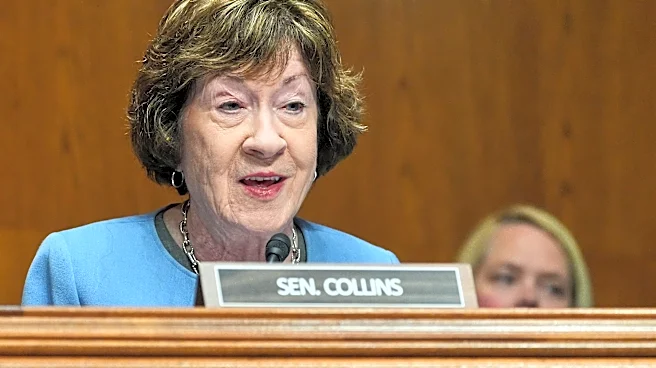
The immediate future of the Troy Jackson campaign will likely involve continued tension between the local team and the operatives installed by Schumer's office. There are indications that the 'let-Jackson-be-Jackson' faction has recently gained some ground, with Jackson's schedule now showing more grassroots events in Maine. However, the underlying conflict over campaign control and strategy is expected to persist. The outcome of this internal struggle could significantly influence the effectiveness of Jackson's challenge against incumbent Rep. Susan Collins. Furthermore, the broader implications for Democratic Party dynamics, particularly regarding the balance of power between national leadership and state campaigns, will be closely watched as the election approaches.
Beyond the Headlines
The deeper implications of this situation touch upon the evolving nature of political campaigns and the role of national party structures in shaping local elections. The alleged attempt to 'neuter' a populist candidate like Troy Jackson raises questions about the Democratic Party's commitment to diverse ideological viewpoints and grassroots movements. It also underscores the tension between electability, as perceived by national strategists, and authentic representation of local interests. This incident could fuel debates about the influence of money and professional campaign consultants in politics, potentially leading to calls for greater transparency and accountability in how campaigns are managed and funded. The long-term effect could be a re-evaluation of party strategies for engaging with and supporting candidates who do not fit a conventional mold.