



What's Happening?
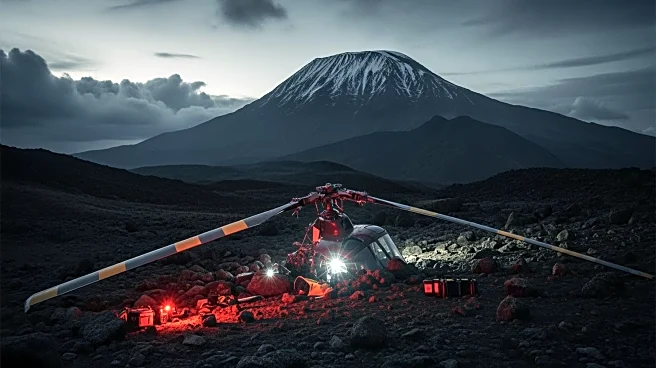
A tragic helicopter crash occurred on Mount Kilimanjaro in Tanzania, resulting in the deaths of five individuals. The incident took place during a rescue mission aimed at evacuating patients from the mountain. Among the deceased were two foreigners, a local
doctor, a tour guide, and the pilot. The crash happened between the Barafu Camp and Kibo Summit, at an altitude exceeding 4,000 meters. The helicopter was operated by Kilimanjaro Aviation, a company known for conducting medical evacuations. The Tanzania Civil Aviation Authority has initiated an investigation to determine the cause of the crash, adhering to international safety regulations. This marks a rare occurrence of aircraft accidents on Mount Kilimanjaro, with the last recorded incident in 2008.
Why It's Important?
The crash highlights the inherent risks associated with rescue operations in challenging terrains like Mount Kilimanjaro. It underscores the need for stringent safety measures and protocols in aviation, especially in high-altitude rescue missions. The incident may prompt a review of current safety practices and regulations governing such operations. For the tourism industry, which heavily relies on the allure of Mount Kilimanjaro, this accident could impact perceptions of safety and potentially affect tourist inflow. Additionally, the loss of life, including that of medical personnel, emphasizes the critical role and risks faced by those involved in emergency medical services.
What's Next?
The ongoing investigation by the Tanzania Civil Aviation Authority will be crucial in understanding the factors that led to the crash. Findings from the investigation could lead to recommendations or changes in aviation safety protocols, particularly for rescue missions in mountainous regions. The aviation company involved may also face scrutiny regarding its operational procedures and safety standards. In the broader context, this incident might influence policy discussions on improving emergency response capabilities and infrastructure in remote and challenging environments.