




What's Happening?
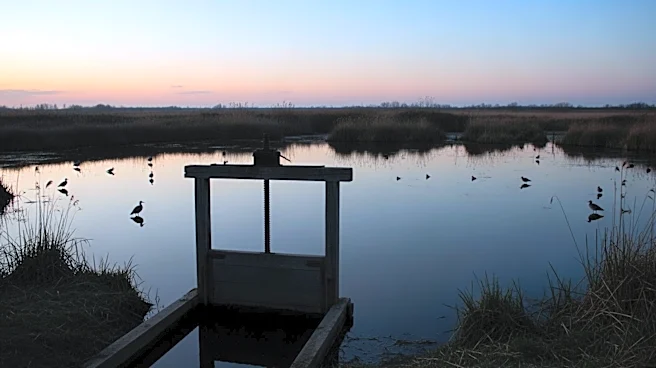
The New South Wales government has been delaying the release of environmental water flows to critical wetlands in the state's north-west, prioritizing agricultural activities over ecological needs. This decision has reportedly harmed the breeding cycles
of frogs and endangered birds, and damaged local ecosystems. Emails released by a local grazier, Jonathon Guyer, reveal that the state's environment and water department postponed water flows to accommodate the harvesting of winter cereal crops. This delay has led to significant ecological consequences, including the disruption of breeding cycles for various species and the death of fledgling waterbirds and frogs. The Gwydir wetlands, which are internationally recognized and support several Ramsar-listed sites, rely on these environmental flows to maintain their health. Despite the ecological importance, the department has repeatedly adjusted water delivery schedules to fit around farming activities, raising concerns about the prioritization of agricultural interests over environmental conservation.
Why It's Important?
The delay in environmental water flows highlights a critical conflict between agricultural interests and ecological conservation. The decision to prioritize farming over the health of wetlands could have long-term detrimental effects on biodiversity and the sustainability of these ecosystems. The Gwydir wetlands are home to numerous endangered species, and their survival depends on timely water flows. The situation underscores the broader challenge of balancing economic activities with environmental responsibilities. If such practices continue, they could lead to irreversible damage to vital ecosystems, affecting biodiversity and potentially leading to the loss of species. This issue also raises questions about the influence of agricultural stakeholders on government decisions, which could undermine efforts to protect and preserve natural habitats.
What's Next?
The NSW Greens water spokesperson, Cate Faehrmann, has called on the government to assure the public of its commitment to environmental obligations under various water-related laws and treaties. There is a need for a reassessment of water management practices to ensure that ecological needs are prioritized. The government may face increased scrutiny and pressure from environmental groups and the public to address these concerns and implement more sustainable water management strategies. Future decisions will likely involve consultations with environmental experts and community stakeholders to balance agricultural needs with ecological preservation. The outcome of these discussions could set a precedent for how environmental resources are managed in the face of competing interests.
Beyond the Headlines
The ongoing situation in the Gwydir wetlands reflects a broader issue of environmental governance and the challenges of implementing effective conservation policies. The repeated delays in water flows suggest a systemic issue within the water management framework, where economic activities are often prioritized over ecological needs. This raises ethical questions about the responsibility of government agencies to protect natural resources and the extent to which economic interests should influence environmental policy. The case also highlights the importance of transparency and accountability in government decision-making processes, as well as the need for robust mechanisms to ensure that environmental laws and treaties are upheld.