


What's Happening?
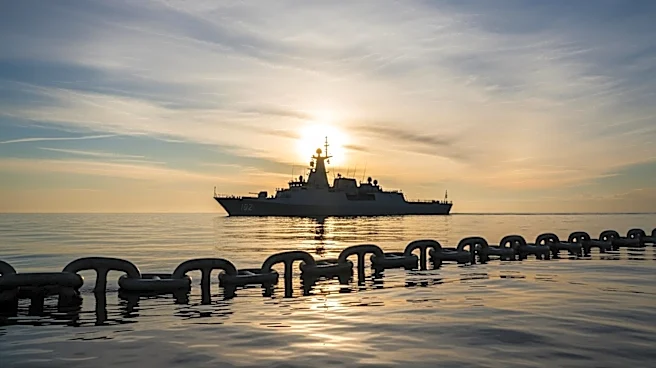
Iran has announced the reopening of the Strait of Hormuz for commercial shipping, following a temporary ceasefire between Israel and Hezbollah. Despite this development, President Trump has stated that the U.S. naval blockade on Iran will remain in place
until a complete transaction with Iran is finalized. The blockade is part of ongoing tensions involving Iran's military activities in the region. Iran's Foreign Ministry has indicated that it may take reciprocal actions if the blockade continues. The reopening of the strait has led to a drop in oil prices and a rally in stock markets, reflecting the strait's importance as a major global oil transit route.
Why It's Important?
The Strait of Hormuz is a critical chokepoint for global oil and gas shipments, with about 20% of the world's crude oil passing through it. The U.S. blockade on Iran, despite the strait's reopening, underscores ongoing geopolitical tensions that could impact global energy markets. The situation affects not only the U.S. and Iran but also other countries reliant on oil shipments through the strait. The blockade's continuation could lead to further economic disruptions, particularly in the Middle East, where countries like Qatar and Iran are already experiencing significant economic contractions due to the conflict.
What's Next?
The future of the U.S. blockade and the broader geopolitical situation in the region will likely depend on the outcomes of ongoing negotiations between the U.S. and Iran. The international community, including European leaders, is pushing for a long-term solution to ensure the free passage of commercial ships through the Strait of Hormuz. The U.S. may face pressure to lift the blockade if a comprehensive agreement with Iran is reached. Meanwhile, Iran's potential reciprocal actions could escalate tensions further, affecting global energy security.