




What's Happening?
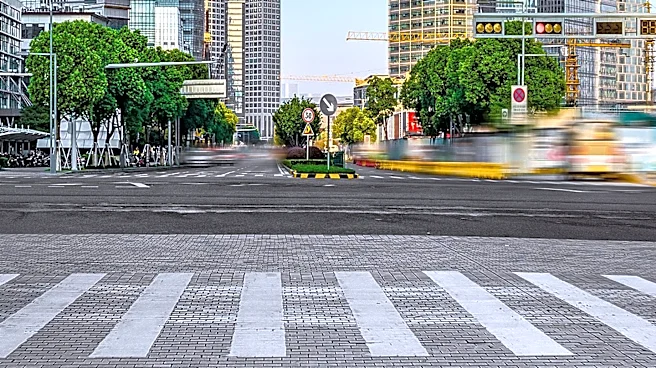
Richard Grenell, a special envoy with the Trump administration, has publicly criticized Los Angeles City Councilwoman Nithya Raman for what he described as government incompetence. Raman posted on social media about her office successfully painting a crosswalk
at Sunset Drive and Bates Street after approximately nine months. Grenell, along with other critics, mocked the achievement, highlighting that the street's cracked pavement was not repaired, only painted. The project was widely ridiculed online, with many pointing out the excessive time taken for a simple paint job and the lack of underlying infrastructure repair. This incident follows previous criticism of Los Angeles officials for other infrastructure projects, such as the 'La Sombrita' shades.
Why It's Important?
This incident is important as it underscores ongoing public and political scrutiny regarding the efficiency and effectiveness of local government in major U.S. cities. The criticism from a figure like Richard Grenell, who has held significant roles in a presidential administration, amplifies the debate beyond local politics, potentially reflecting broader national concerns about urban infrastructure management and public spending. For residents, the perceived inefficiency in addressing basic infrastructure needs can erode trust in local governance and raise questions about the allocation of taxpayer money. For politicians, such public missteps can become campaign issues, as seen with Raman, who is a mayoral candidate, and can be used by opponents to highlight perceived failures in leadership and resource management. The online mockery also demonstrates the power of social media in shaping public perception and holding officials accountable, even for seemingly minor projects.
What's Next?
The immediate aftermath will likely involve continued public discussion and political maneuvering, especially given Nithya Raman's mayoral candidacy. Her campaign may need to address the criticism directly, perhaps by providing more context on the project's timeline or by outlining broader infrastructure plans. Opponents will likely continue to use this incident to question her administrative capabilities. The broader implication could be increased pressure on Los Angeles city officials to demonstrate more tangible and efficient progress on infrastructure projects. This event might also prompt a reevaluation of how public works projects are communicated to the public, emphasizing transparency and realistic timelines to manage expectations and avoid similar backlashes. The incident could also fuel discussions about the allocation of resources and the prioritization of infrastructure repairs versus cosmetic improvements in urban areas.
Beyond the Headlines
Beyond the immediate political fallout, this event touches upon deeper issues concerning urban planning, public perception of government, and the challenges of infrastructure maintenance in large, complex cities. The focus on a painted crosswalk over unrepaired cracks highlights a potential disconnect between superficial improvements and fundamental needs. This can lead to public cynicism about government priorities and the effectiveness of bureaucratic processes. Ethically, it raises questions about accountability and transparency in public works, particularly when projects are presented as achievements despite apparent shortcomings. Culturally, the widespread online mockery reflects a growing trend of public engagement and scrutiny, where citizens, often through social media, can quickly mobilize to critique official narratives. This dynamic can influence how public officials approach and communicate their work, potentially leading to more cautious or more transparent approaches in the future. The incident also subtly points to the broader challenge of maintaining aging infrastructure in U.S. cities, where resources are often stretched, and complex problems require more than simple solutions.