




What's Happening?
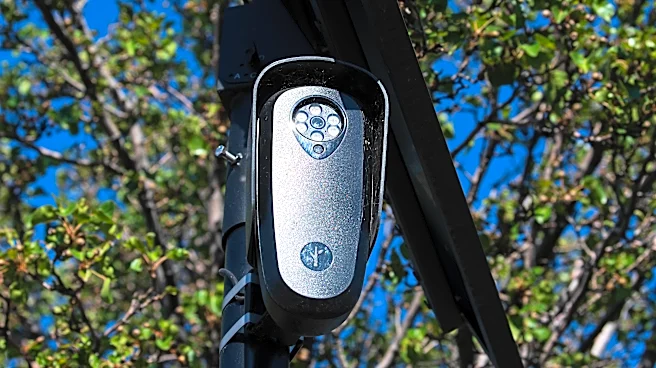
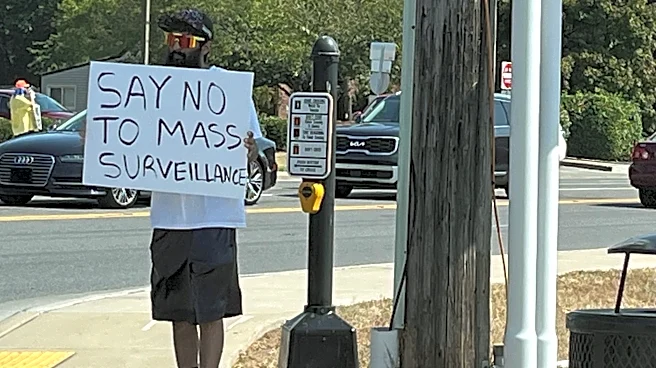
A San Jose City Council committee has directed staff to develop potential safeguards for Flock automated license plate readers (ALPRs). This decision follows a public rally outside City Hall, organized by the Safety Over Surveillance Santa Clara County
Coalition, urging the cancellation of the city's contract with Flock. The protest was prompted by the recent revelation that a San Jose Police Department (SJPD) officer was fired for improperly accessing the Flock database to track a woman who accused his cousin of domestic violence. This incident has intensified concerns about privacy and potential misuse of the technology. The committee's unanimous vote instructs the city manager's office to draft an ordinance outlining unauthorized uses of Flock data and potential penalties for violations.
Why It's Important?
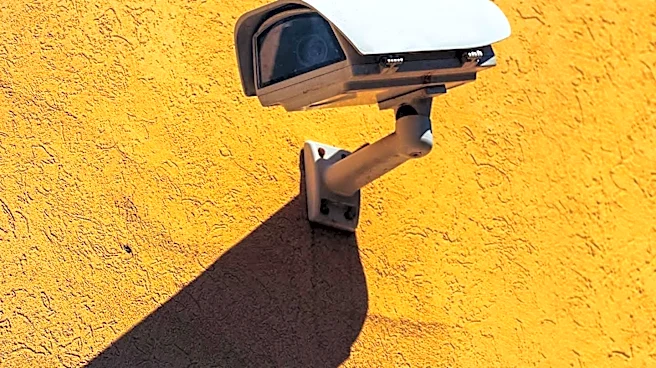
The controversy surrounding Flock cameras in San Jose highlights a critical national debate regarding privacy, surveillance technology, and police accountability. The incident involving the SJPD officer underscores the potential for abuse of such systems, raising questions about data security and civil liberties. While law enforcement agencies often laud ALPRs for their crime-fighting benefits, civil liberty groups and residents express concerns about mass surveillance and the Fourth Amendment's protection against unreasonable searches. The city's move to implement guardrails reflects a growing recognition of the need to balance public safety with individual rights. This situation could influence how other U.S. cities approach the deployment and regulation of ALPR technology, potentially leading to stricter oversight and accountability measures nationwide.
What's Next?
The city manager's office is expected to take approximately three weeks to develop a draft ordinance outlining unauthorized uses of Flock data and potential civil and criminal penalties. This draft will then be presented to the Rules and Open Government Committee before being placed on a regular City Council agenda for further discussion and potential adoption. Proposed safeguards include prohibiting access to the Flock database on personal devices, implementing multi-factor authentication, and establishing an audit system overseen by the Independent Police Auditor and other city departments. Additionally, the city is urged to advocate for state legislation that would implement criminal penalties for unauthorized access. Meanwhile, a federal lawsuit filed by San Jose residents alleging Fourth Amendment violations is scheduled for a hearing on the city's motion to dismiss.
Beyond the Headlines
The debate over Flock cameras in San Jose delves into the complex ethical and legal dimensions of pervasive surveillance in modern society. Beyond the immediate concerns of police misconduct, the widespread deployment of ALPR systems, with approximately 500 cameras in San Jose and 120,000 nationwide, raises fundamental questions about the nature of privacy in public spaces. Critics argue that these systems create an unprecedented state of surveillance, disproportionately affecting vulnerable populations, including immigrant communities, due to concerns about 'side-door searches' by federal agencies. The call for criminal penalties for unauthorized access and the ongoing lawsuits highlight a societal struggle to define the boundaries of governmental power in the digital age, potentially shaping future legal precedents and public policy regarding data collection and individual rights across the U.S.