






What's Happening?
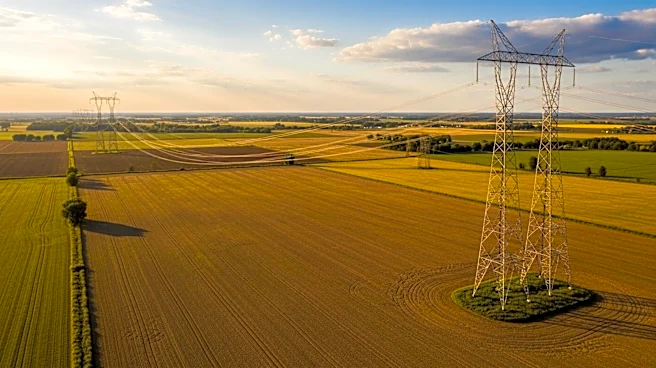
The Department of Energy's National Interest Electric Transmission Corridors (NIETC) study has identified areas in New Mexico and Colorado that may experience transmission capacity constraints. This has raised concerns among farmers and ranchers about
potential land grabs and the impact on agriculture. The DOE has the authority to use eminent domain to establish corridors for high-voltage transmission lines, but past attempts have been blocked by courts. The Biden administration's goal to reach net-zero emissions by 2050 has led to amendments in the Federal Power Act, expanding DOE's authority to establish NIETCs.
Why It's Important?
The establishment of transmission corridors could significantly impact agricultural operations in affected areas, potentially leading to loss of land and disruption of farming activities. This raises ethical and economic concerns, as agriculture is a vital industry in these regions. The DOE's plans could also lead to increased industrialization, affecting rural communities and their dependence on agriculture. The situation highlights the tension between advancing green energy initiatives and preserving agricultural land, a critical issue as the U.S. seeks to balance environmental goals with economic and social impacts.
Beyond the Headlines
The potential use of eminent domain for transmission corridors raises legal and ethical questions about land rights and the balance between public interest and private property. The DOE's broad discretion in establishing NIETCs could lead to speculative projects, impacting rural landscapes and communities. The situation underscores the need for careful consideration of the long-term implications of energy infrastructure development on agriculture and rural economies.