
What's Happening?
The rapid expansion of data centers across the United States has become a significant issue in midterm elections, drawing opposition from diverse groups and prompting increased regulatory scrutiny. Tech
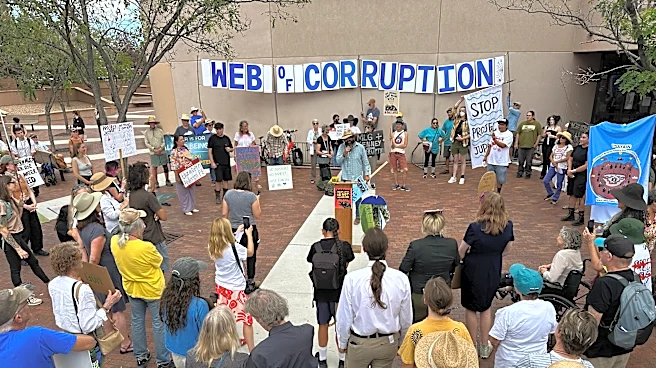
giants like Oracle, Meta, Google, Amazon, and Microsoft are investing over $700 billion in U.S. data centers this year, driving a construction boom, particularly in rural areas. This expansion has united conservative farming communities and environmental advocacy groups due to shared concerns over water scarcity, pollution, and loss of farmland. In New Mexico, for instance, the Center for Biological Diversity challenged well drilling permits for Oracle and OpenAI's Project Jupiter due to water supply concerns. While President Trump defends data centers for job creation and economic benefits, many governors are shifting stances, with Texas Governor Greg Abbott ordering regulators to address electricity bill impacts and New York Governor Kathy Hochul imposing a one-year ban on large data centers. The energy demands of artificial intelligence are also fueling a boom in natural gas-fired power plants, raising worries about climate goals.
Why It's Important?
The growing controversy surrounding data centers highlights a critical intersection of technology, environment, and local governance in the U.S. The massive energy and water demands of these facilities are straining existing infrastructure and natural resources, leading to increased utility costs and environmental concerns. This issue has become a potent political force, influencing midterm elections as communities push back against unchecked development. The divergence in political views, with President Trump advocating for data centers and some governors imposing restrictions, reflects a national debate on how to balance technological advancement with environmental sustainability and community well-being. The impact on climate goals, particularly the reliance on natural gas-fired power plants to meet AI's energy needs, poses a significant challenge to renewable energy initiatives and the broader fight against climate change. This situation affects tech companies, energy providers, local communities, and environmental organizations across the country.
What's Next?
The regulatory landscape for data centers is expected to toughen as states and local governments respond to public pressure and environmental concerns. We may see more states implementing measures such as sales tax exemptions for new data centers, requiring facilities to pay for their own electricity supply, limiting water usage, and demanding greater transparency about their operations. Legislative efforts to ensure data centers are powered by climate-friendly sources are also anticipated, with states like Michigan, Oregon, and Minnesota already enacting laws to protect clean energy requirements. The ongoing debate will likely involve continued advocacy from labor unions, who support data center projects for job creation, and environmental groups pushing for sustainable practices. The federal government, under President Trump's administration, may continue to promote policies that facilitate data center construction, potentially creating friction with state-level regulations.
Beyond the Headlines
The data center boom reveals deeper societal tensions regarding technological progress and its environmental footprint. The rapid growth of AI, while promising innovation, is exposing the hidden costs of digital infrastructure, particularly its intensive resource consumption. This situation forces a re-evaluation of what constitutes 'progress' and whether the benefits of advanced AI outweigh the environmental and social costs. The alignment of conservative rural communities and left-leaning environmental groups against data centers signifies a rare convergence of interests, highlighting a shared concern for local resources and quality of life that transcends traditional political divides. This could lead to new forms of grassroots activism and political alliances, fundamentally altering how large-scale industrial developments are approved and integrated into communities, and potentially shaping future policies on sustainable technology and resource management.