






What's Happening?
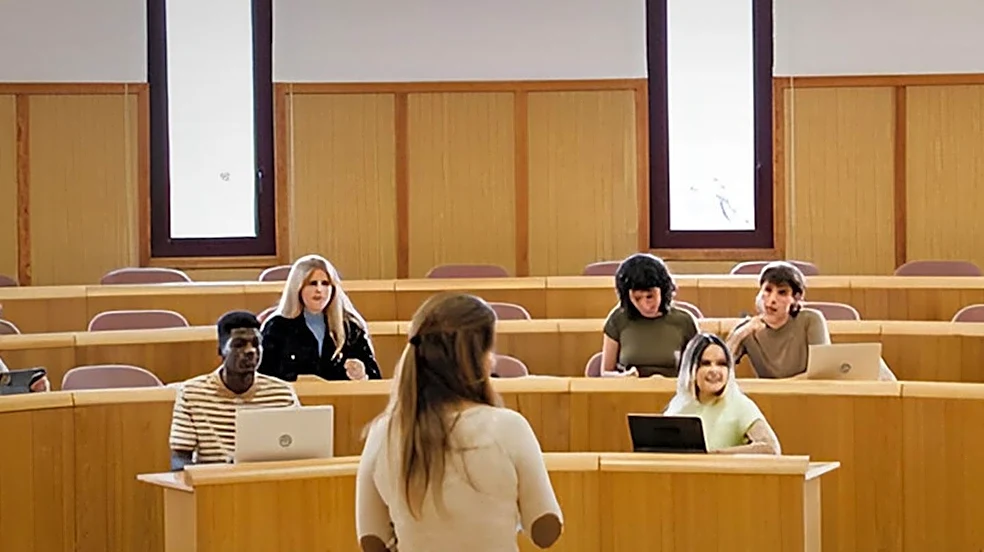
U.S. Supreme Court Justice Amy Coney Barrett recently visited the University of Georgia School of Law, where she delivered a private talk to approximately 160 students, faculty, and staff members. The event was by invitation only, with attendees securing
seats in advance. A spokesperson for the law school confirmed that inviting Supreme Court justices to speak on campus is a common practice among law schools. The last sitting U.S. justice to visit the University of Georgia School of Law in a similar capacity was Justice Clarence Thomas in 2018. The session was structured as a question-and-answer format, moderated by Peter “Bo” Rutledge, the law school’s Talmadge chair of law, and was simulcast into two additional classrooms to accommodate more individuals.
Why It's Important?
The visit by Justice Barrett to a prominent law school like the University of Georgia underscores the ongoing engagement between the judiciary and legal academia. Such interactions provide law students and faculty with a unique opportunity to hear directly from a Supreme Court Justice, offering insights into legal reasoning, judicial philosophy, and the workings of the nation's highest court. These events can influence future legal professionals by exposing them to different perspectives and encouraging critical thinking about constitutional law and judicial interpretation. For the University of Georgia School of Law, hosting a Supreme Court Justice enhances its prestige and provides an invaluable educational experience for its community, reinforcing its role in legal discourse and education.
What's Next?
While Justice Barrett's visit was a singular event, the practice of Supreme Court justices engaging with academic institutions is likely to continue. Law schools across the country will likely extend similar invitations to other justices, fostering ongoing dialogue between the judiciary and the legal education sector. These engagements often occur without significant public fanfare, focusing instead on direct interaction with the academic community. Future visits by justices could cover a range of topics, from constitutional interpretation to the practicalities of legal careers, continuing to shape the perspectives of aspiring lawyers and legal scholars. The University of Georgia School of Law, having hosted justices in the past, will likely remain a venue for such high-profile legal discussions.
Beyond the Headlines
The tradition of Supreme Court justices visiting law schools extends beyond mere public relations; it serves as a vital link between theoretical legal education and the practical application of law at the highest level. These interactions can subtly influence the development of legal thought by exposing justices to academic discourse and providing students with a deeper understanding of judicial decision-making. Such visits also highlight the importance of judicial transparency and accessibility, even in private settings, by allowing a controlled environment for dialogue. Furthermore, these engagements can inspire students to pursue careers in public service or the judiciary, contributing to the long-term health and evolution of the U.S. legal system.