


What's Happening?
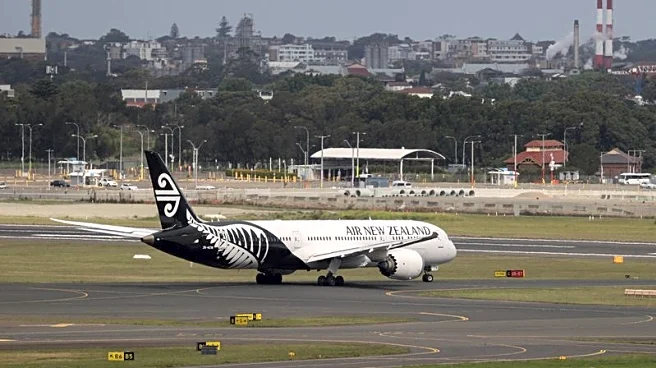
Air New Zealand has announced potential fare increases due to unprecedented fluctuations in global jet fuel prices. The airline has suspended its earnings guidance, citing significant impacts on its second-half earnings. Jet fuel prices have doubled since
the start of the Middle East conflict, affecting operating costs. Qantas CEO Vanessa Hudson noted the airline's hedging strategy provides some protection, but the situation remains concerning. Airlines in Asia, less hedged against fuel price volatility, are more exposed to sudden spikes. The Australian market may see quick impacts on routes to Europe, with higher fares expected during the peak travel season.
Why It's Important?
The increase in fuel prices poses a significant challenge for the aviation industry, potentially leading to higher travel costs for consumers. This situation could affect travel demand and profitability for airlines, particularly those with less hedging against fuel price volatility. The potential fare increases highlight the broader economic impact of geopolitical tensions on global industries. The aviation sector may need to adjust strategies to manage costs and maintain competitiveness in a volatile market.
What's Next?
As the conflict continues, airlines may implement further fare increases to offset rising fuel costs. The Australian Competition and Consumer Commission (ACCC) has indicated it will monitor fuel pricing to protect consumers from excessive price hikes. The aviation industry will need to navigate ongoing geopolitical tensions and fuel market disruptions, potentially leading to changes in routes and schedules.