





What's Happening?
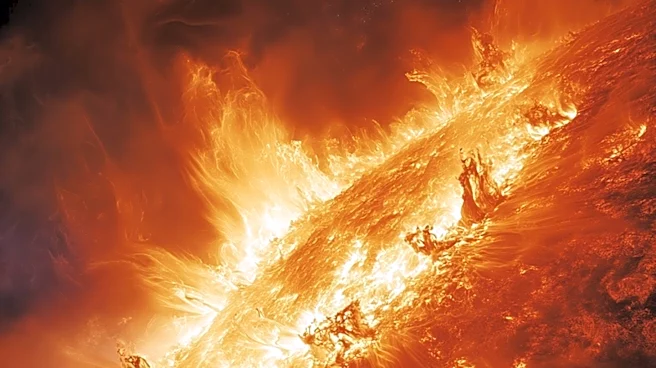
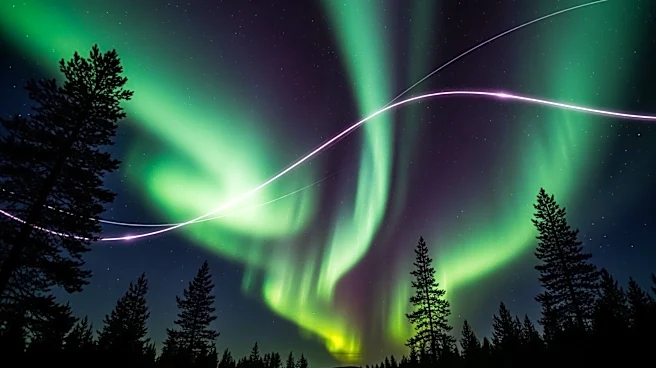
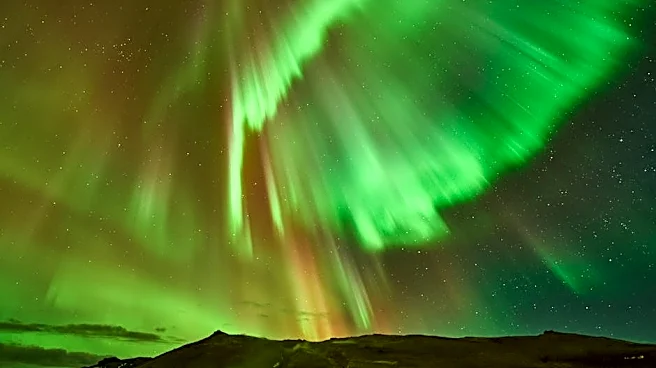
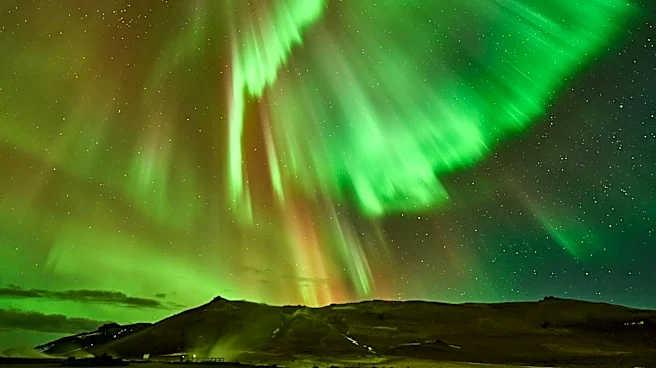
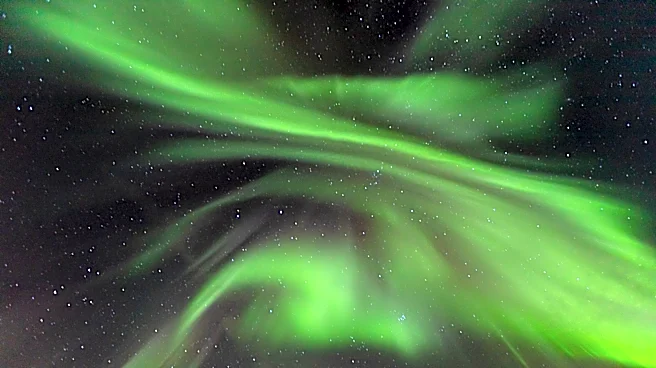
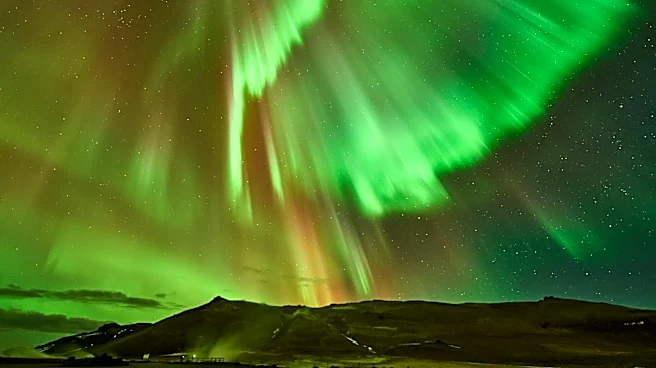
A rare merger of two solar eruptions, known as a 'cannibal' solar storm, is expected to enhance the visibility of the Northern Lights further south than usual. The event is caused by the interaction of an X-class solar flare and multiple coronal mass
ejections (CMEs) from sunspot 4455. These charged particles are traveling at about 2,000 km per second and are expected to create a strong magnetic storm upon reaching Earth. The U.S. National Oceanic and Atmospheric Administration (NOAA) predicts that the auroras could be visible as far south as Iowa, Ohio, and Pennsylvania.
Why It's Important?
This solar storm presents a unique opportunity for residents in the U.S. to witness the Northern Lights, a phenomenon typically confined to higher latitudes. The event highlights the dynamic nature of solar activity and its potential impacts on Earth's magnetic field, which can disrupt communications and power systems. Understanding and predicting such solar events are crucial for mitigating their effects on technology and infrastructure. The increased visibility of the auroras may also boost interest in space weather and its implications for daily life.
What's Next?
As the solar storm approaches, scientists and agencies like NOAA will continue to monitor its progress and potential impacts. Public advisories may be issued to inform about possible disruptions to communications and power systems. The event may also lead to increased public engagement with space weather phenomena, encouraging educational initiatives and citizen science projects. Researchers will study the storm's effects to improve predictive models and response strategies for future solar events.