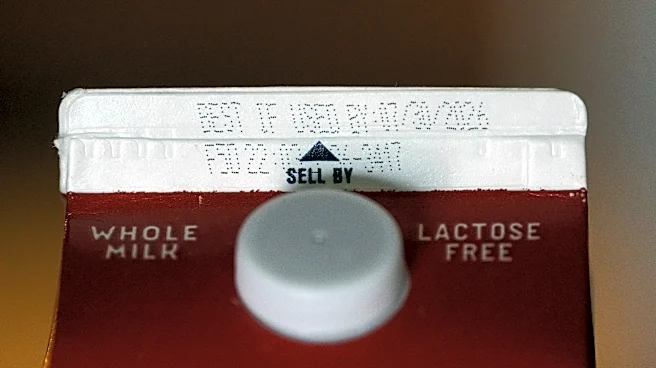







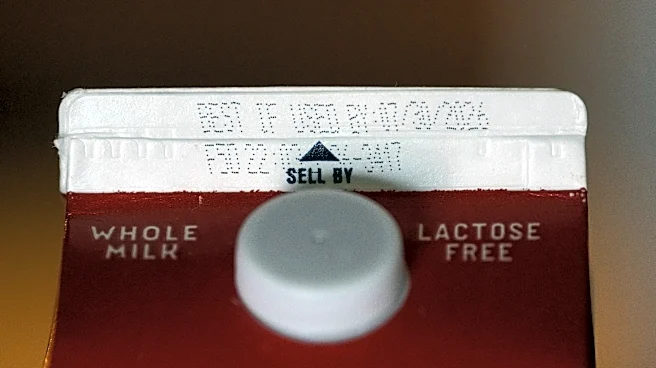




What's Happening?
California has enacted a new law banning the use of 'sell by' labels on food packaging, aiming to reduce food waste and consumer confusion. The law, which took effect recently, mandates that food manufacturers use standardized labels such as 'Best if Used
By' for peak quality and 'Use By' for product safety. This initiative is part of California's broader efforts to cut down on food waste and its associated climate-warming emissions. The 'sell by' labels, previously used as a guide for retailers, often mislead consumers into discarding food that is still safe to eat. The new labeling system is expected to simplify consumer decisions and reduce the amount of food unnecessarily thrown away. Similar legislation has been proposed in other states, including New York, where a comparable law is awaiting the governor's signature.
Why It's Important?
The implementation of standardized food labels in California is significant as it addresses a major cause of household food waste. By eliminating the 'sell by' labels, which are often misinterpreted as expiration dates, the state aims to reduce the 6 million tons of unexpired food discarded annually. This change not only benefits the environment by decreasing waste and emissions but also supports food banks and reduces consumer costs. The move has garnered support from various stakeholders, including the California Grocers Association, which sees it as a step towards simplifying consumer choices and reducing waste. The initiative also adds momentum to the push for a national standard, with a bipartisan bill pending in Congress.
What's Next?
As California leads the way in food labeling reform, other states may follow suit, potentially leading to a nationwide standard. The success of this initiative could influence federal policy, encouraging the adoption of uniform labeling across the country. In the meantime, consumers in California will gradually see the new labels as grocers sell through existing stock. The transition period will require adjustments from manufacturers and retailers, but the long-term benefits of reduced waste and clearer consumer guidance are expected to outweigh the initial challenges.