








What's Happening?
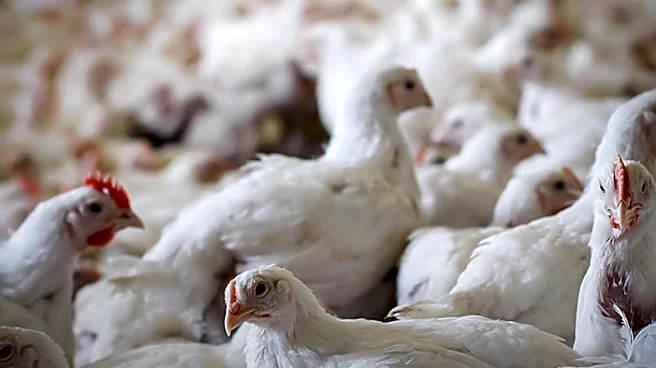
California's Proposition 12, which sets minimum space requirements for farm animals, is impacting pork producers in Kentucky. The law requires breeding pigs to have at least 24 square feet of space, leading to significant operational changes for farmers
like Michael Williford of Williford Farms. The initiative has raised concerns about increased costs and reduced production capacity. Kentucky Attorney General Russell Coleman has criticized the law, arguing it imposes unfair burdens on local farmers. The 'Save Our Bacon Act,' a federal bill, is gaining support as it seeks to prevent states from enacting their own animal welfare regulations, potentially nullifying Proposition 12.
Why It's Important?
The impact of Proposition 12 on Kentucky farmers underscores the broader economic and regulatory challenges faced by the agricultural industry. The law's requirements could lead to increased production costs and reduced competitiveness for farmers who cannot afford to comply. This situation highlights the tension between state-level regulations and the economic realities of farming, particularly in states that rely heavily on agriculture. The outcome of the 'Save Our Bacon Act' could influence future regulatory approaches and the balance of power between state and federal governments in agricultural policy.
What's Next?
As the 'Save Our Bacon Act' gains traction, stakeholders will likely engage in lobbying efforts to influence its outcome. The bill's progress could lead to legal challenges and debates over states' rights and federal authority. Farmers, policymakers, and animal welfare advocates will continue to monitor the situation closely, as the resolution of this issue could set a precedent for future agricultural regulations. The ongoing debate may also prompt discussions on the broader implications of federal intervention in state-level policies.