



What's Happening?
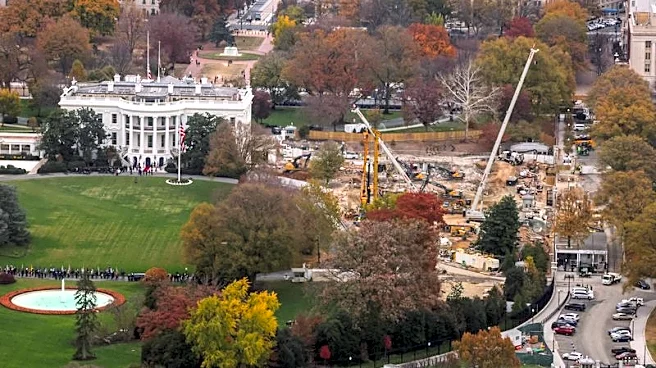
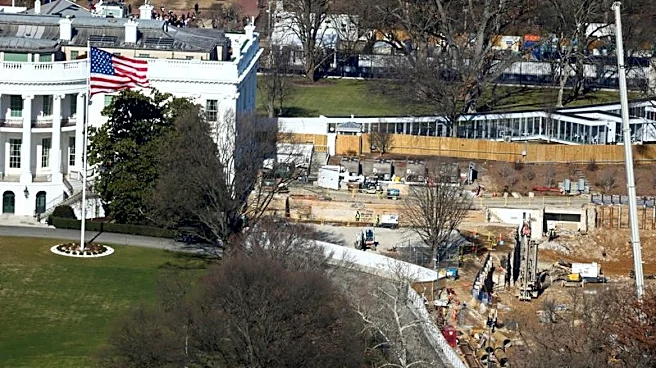
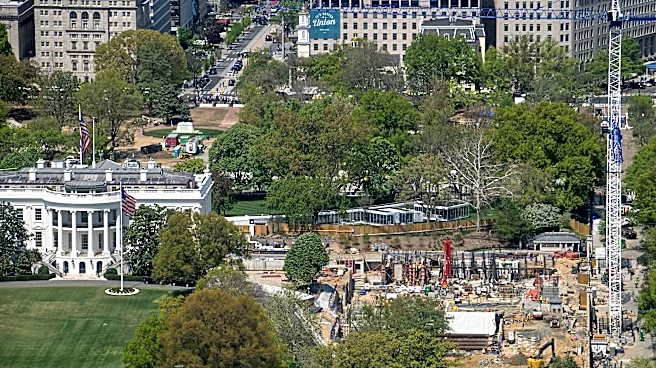
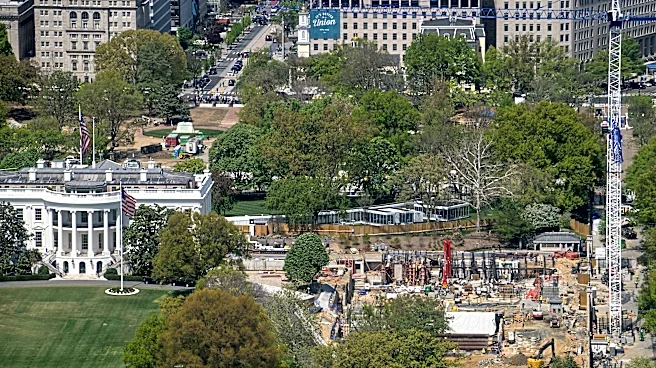
The U.S. Court of Appeals for the District of Columbia has granted an administrative stay allowing the construction of a ballroom and presidential bunker at the White House to proceed. This decision temporarily overturns a previous order by U.S. District Judge
Richard Leon, who had blocked most above-ground construction in March. The court has scheduled a hearing for June 5 to further discuss the legality of the construction. The Justice Department appealed Leon's ruling, arguing that halting the construction would jeopardize national security and leave a large hole beside the Executive Residence. President Trump criticized Judge Leon's decision, labeling it as an 'illegal overreach' and emphasizing the importance of the ballroom for national security.
Why It's Important?
The continuation of the White House ballroom construction project has significant implications for national security and historical preservation. The Justice Department's appeal highlights concerns about potential security risks if the construction is halted. President Trump's emphasis on the project's importance underscores its perceived role in enhancing security measures at the White House. However, the National Trust for Historic Preservation's lawsuit reflects concerns about the project's impact on historical sites and the lack of proper authorization. The outcome of this legal dispute could set precedents for future construction projects at historically significant sites, balancing security needs with preservation efforts.
What's Next?
The next steps involve a court hearing scheduled for June 5, where further arguments will be presented regarding the legality and implications of the construction project. Stakeholders, including the Justice Department and the National Trust for Historic Preservation, are expected to present their cases. The decision from this hearing could influence future construction projects at the White House and other historical sites, potentially affecting how national security and preservation concerns are balanced. Political leaders and preservationists will likely continue to monitor the situation closely, as the outcome could have broader implications for federal construction projects.
Beyond the Headlines
The legal battle over the White House ballroom construction raises questions about the intersection of national security and historical preservation. Ethical considerations include the potential impact on historical landmarks and the precedent set for future construction projects. The case also highlights the role of judicial oversight in executive decisions, as the court's involvement reflects checks and balances in government operations. Long-term implications may include changes in how construction projects are authorized and managed at historically significant sites, influencing policy decisions and preservation strategies.