






What's Happening?
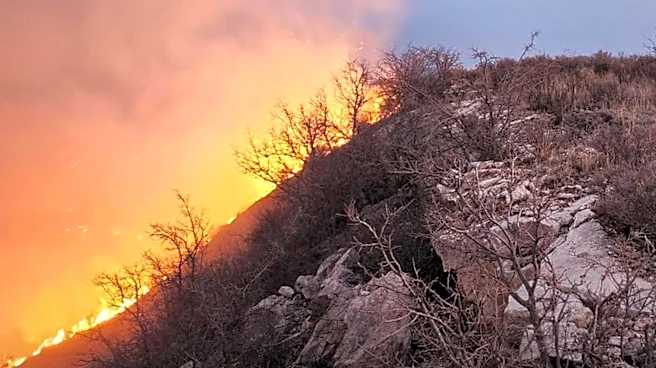
More than half of the Saline Valley Warm Springs Campground in Death Valley has reopened after a fire, which investigators from the U.S. Wildland Fire Service determined was accidentally started by a propane grill igniting a palm tree in the Lower Springs area.
The fire is now fully contained, and National Park Service staff are monitoring the area while assessing damage to park infrastructure and natural and cultural resources. Superintendent Mike Reynolds emphasized that visitor safety is the top priority, noting that residual heat and hazardous materials remain in the burn area. Areas now accessible to the public include Palm Spring, the camping area between Lower Spring and Palm Spring, and the double-vault toilet at Lower Spring. However, the immediate burn area remains closed due to lingering hot spots and hazardous materials, with visitors advised against entering or attempting to repair damaged infrastructure.
Why It's Important?
The partial reopening of Saline Valley Warm Springs Campground is significant for both recreational enthusiasts and environmental conservation efforts. The campground is a popular destination, and its closure impacts tourism and local economies that rely on visitor traffic. The incident highlights the ongoing risks associated with human activity in natural environments, particularly concerning fire safety and the use of equipment like propane grills. The National Park Service's diligent assessment of damage to infrastructure and natural resources underscores the importance of preserving these unique ecosystems. The decision to allow existing mature palms to remain while replacing dead ones with native vegetation reflects a broader commitment to ecological restoration and managing invasive species within national parks. This event serves as a reminder of the delicate balance between public access to natural wonders and the imperative to protect them from human-induced threats.
What's Next?
A Department of the Interior post-fire recovery team is scheduled to assess the burned area in mid-October. This assessment will evaluate damaged and destroyed National Park Service infrastructure, the impact on natural and cultural resources, and identify safety hazards, including a large bank of partially burned batteries. Debris and hazardous materials are expected to be removed in early winter. The National Park Service will continue to monitor affected California fan palms, removing only those determined to be dead, consistent with the existing management plan that prohibits new California fan palms due to their invasive nature. Visitors should continue to adhere to all posted closures and safety warnings. Future efforts will likely focus on long-term restoration, visitor education on fire prevention, and potentially reviewing regulations regarding cooking equipment in sensitive areas to prevent similar incidents.
Beyond the Headlines
This incident in Death Valley brings to light the complex challenges faced by national parks in balancing public enjoyment with environmental protection. The accidental ignition by a propane grill underscores the need for heightened awareness and stricter regulations regarding fire sources in arid and sensitive ecosystems. The presence of invasive California fan palms, even as existing ones are allowed to live out their natural lives, highlights the long-term ecological strategies employed by the National Park Service to restore native biodiversity. The recovery process, involving the removal of hazardous materials and infrastructure repair, reflects the substantial investment required to maintain these natural treasures. This event also subtly points to the broader implications of climate change, where drier conditions can exacerbate fire risks, making responsible visitor behavior and robust park management even more critical for the preservation of these invaluable natural landscapes for future generations.