
What's Happening?
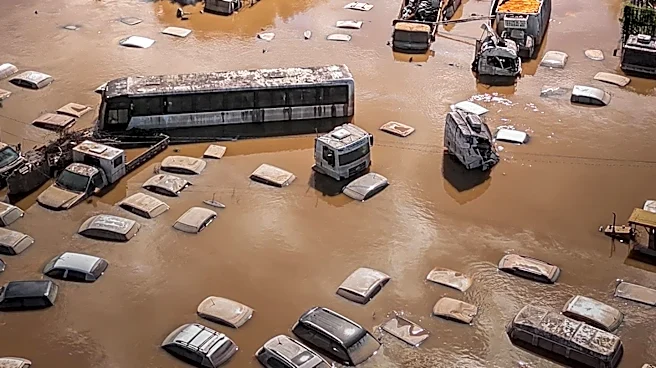
The UN refugee agency (UNHCR) has issued a warning that severe flooding, anticipated to be linked to the El Niño weather pattern, could displace up to three million people across Somalia, Kenya, South
Sudan, and Uganda by the end of 2026. This projection is part of a broader concern highlighted by UNHCR regarding the increasing threat of climate hazards to nearly 90 million people already forced from their homes by conflict and persecution globally. The agency's report, released ahead of the COP31 UN climate summit, emphasizes that climate change is exacerbating the challenges faced by refugees and internally displaced persons, making it harder for them to rebuild their lives. Furthermore, the report notes that by 2050, one in three refugee camps in sub-Saharan Africa could experience at least 100 days of dangerous heat annually, intensifying risks for vulnerable populations.
Why It's Important?
This warning underscores the critical intersection of climate change, displacement, and humanitarian crises, particularly in regions already grappling with instability. The potential displacement of millions due to El Niño-induced flooding would place immense strain on humanitarian resources and infrastructure in East Africa. For the United States, while not directly impacted geographically, such large-scale humanitarian crises often necessitate international aid and intervention, potentially drawing on U.S. foreign policy and financial resources. The instability caused by mass displacement can also have broader geopolitical implications, affecting regional security and potentially creating new challenges for international diplomacy. The report also highlights a significant funding gap, with fragile and conflict-affected countries receiving only about 10 percent of global climate finance, which limits their ability to build resilience against extreme weather events.
What's Next?
UNHCR plans to urge governments and climate finance institutions at COP31 to integrate refugees and displaced communities into national climate plans and funding programs. The agency is also advocating for increased long-term investment in climate adaptation in fragile and conflict-affected regions, emphasizing locally led solutions over short-term humanitarian assistance. These efforts aim to reduce future displacement and support the rebuilding of lives for those affected. The international community, including the U.S., will likely face calls for greater financial contributions and policy support to address these growing climate-induced humanitarian challenges. The effectiveness of these calls will determine the scale of the response and the ability of affected nations to mitigate the impact of future climate events.
Beyond the Headlines
The deeper implications of this situation extend to the concept of 'climate refugees' and the legal and ethical frameworks surrounding their protection. As climate change increasingly becomes a primary driver of displacement, existing international laws and conventions may need re-evaluation to adequately address the rights and needs of those forced to flee due to environmental factors. The 'double injustice' faced by refugees—fleeing conflicts they didn't cause and then confronting a climate crisis they contributed little to—raises profound questions about global responsibility and equity. This scenario also highlights the interconnectedness of global challenges, where climate change in one region can have ripple effects on international aid, security, and migration patterns, demanding a more integrated and proactive global response.