



What's Happening?
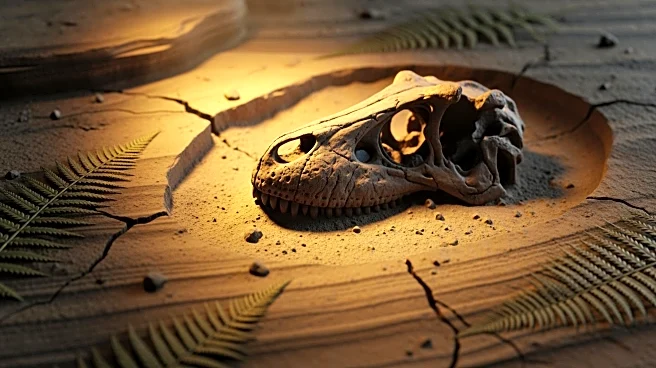
A new species of Spinosaurus, named Spinosaurus mirabilis, has been identified from fossilized skull and jawbones found in Niger. This discovery marks the first identification of a new Spinosaurus species in over a century. The findings, published in the journal
Science, suggest that this prehistoric creature, which lived approximately 95 million years ago, had a large bony crest atop its head. The research indicates that Spinosaurus mirabilis was a semiaquatic predator, similar to a heron, adapted for hunting along shorelines and river edges. The fossils were found far inland, suggesting the creature lived and hunted in river systems rather than marine environments. The study, led by Paul Sereno from the University of Chicago, highlights the creature's unique adaptations, including a long, narrow snout and interlocking teeth for catching fish.
Why It's Important?
The discovery of Spinosaurus mirabilis provides significant insights into the evolution and ecological adaptations of the Spinosaurus genus. Understanding the lifestyle and habitat of these ancient predators helps paleontologists piece together the ecological dynamics of prehistoric ecosystems. This research contributes to the ongoing debate about whether Spinosaurus species were primarily marine predators or shoreline hunters. The findings also underscore the importance of inland fossil sites in revealing the diversity and distribution of ancient species. Such discoveries can inform current ecological studies by providing historical context for species adaptation and survival strategies.
What's Next?
Future research will likely focus on further excavations in the region to uncover more fossils that could provide additional insights into the anatomy and behavior of Spinosaurus mirabilis. Researchers may also use modern technology, such as 3D modeling, to reconstruct the creature's full skeletal structure and better understand its ecological role. The study's findings may prompt a reevaluation of other Spinosaurus fossils, potentially leading to the identification of more distinct species within the genus. Additionally, the discovery may inspire educational initiatives to engage the public and foster interest in paleontology.