



What's Happening?
An international team aboard the Schmidt Ocean Institute's R/V Falkor (too) has conducted a groundbreaking exploration of the seafloor beneath the recently calved iceberg A-84, which broke away from the Antarctic Peninsula ice sheet on January 13, 2025.
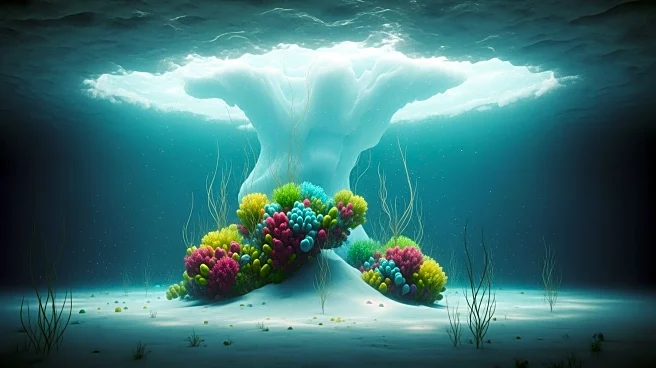
The iceberg, comparable in size to Chicago, revealed a previously inaccessible area of the seafloor. Using the remotely operated vehicle ROV SuBastian, the team observed the deep seafloor for eight days, uncovering thriving ecosystems at depths of up to 1,300 meters. The expedition documented large corals, sponges, and a diverse array of animal life, including icefish, giant sea spiders, and octopus. The researchers were surprised by the significant biomass and biodiversity, potentially discovering several new species.
Why It's Important?
This discovery is significant as it provides new insights into the biodiversity and ecological dynamics of areas previously covered by ice. The findings could have implications for understanding the impacts of climate change on marine ecosystems, as the calving of icebergs like A-84 becomes more frequent. The research highlights the resilience and adaptability of marine life in extreme environments, offering valuable data for conservation efforts. Additionally, the potential discovery of new species could contribute to biological and ecological research, enhancing our understanding of life in the deep sea.
What's Next?
The findings from this expedition may prompt further research into the effects of climate change on Antarctic ecosystems. Scientists may conduct additional studies to monitor changes in biodiversity and ecosystem health as icebergs continue to calve. The data collected could inform global conservation strategies and policies aimed at protecting vulnerable marine habitats. Furthermore, the discovery of new species may lead to more detailed taxonomic studies and investigations into their ecological roles.
Beyond the Headlines
The expedition underscores the importance of international collaboration in scientific research, particularly in remote and challenging environments like Antarctica. It also highlights the role of advanced technology, such as remotely operated vehicles, in expanding our understanding of the natural world. The study may inspire future interdisciplinary research efforts, combining geology, oceanography, and biology to explore other uncharted regions of the ocean.