





What's Happening?
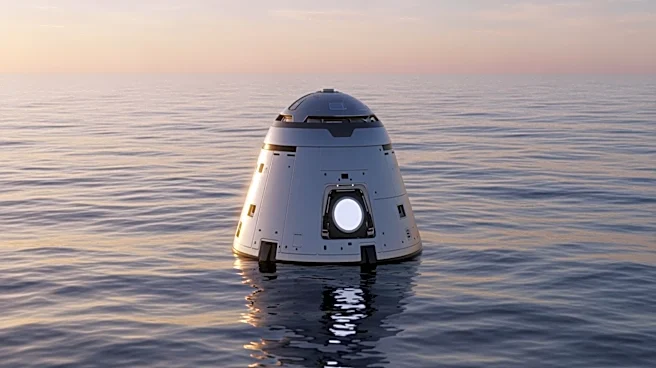
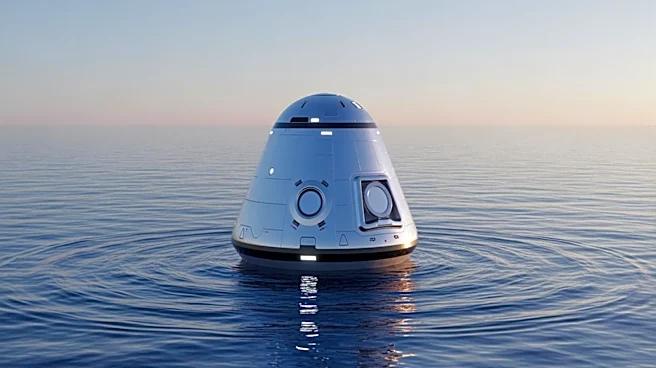
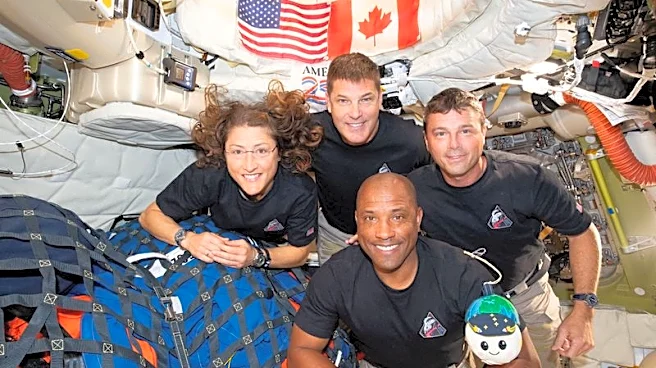
Canadian astronaut Jeremy Hansen and his crew members were warmly welcomed back in Houston after successfully completing the Artemis II mission, which included a splashdown in the Pacific Ocean. The crew, consisting of Hansen, Reid Wiseman, Christina
Koch, and Victor Glover, received a standing ovation at Houston's Ellington Field. The mission marked a significant achievement, surpassing the Apollo 13 record for the farthest crewed space flight from Earth and providing unprecedented observations of the lunar surface. Hansen expressed gratitude towards his family, NASA, and the Canadian Space Agency, highlighting the crew's commitment and the historic nature of their lunar fly-around. The event was attended by NASA officials and Canadian Space Agency president Lisa Campbell, who praised the crew's representation of Canadian values.
Why It's Important?
The successful completion of the Artemis II mission represents a major milestone in international space exploration efforts, particularly in the collaboration between NASA and the Canadian Space Agency. This mission not only advances scientific understanding of the lunar surface but also strengthens international partnerships in space exploration. The achievements of the Artemis II crew could inspire future generations of astronauts and scientists, fostering innovation and collaboration in the aerospace industry. The mission's success also underscores the importance of human spaceflight in expanding our knowledge of space and potentially paving the way for future lunar and Mars missions.
What's Next?
Following the successful return of the Artemis II crew, NASA and its international partners are likely to continue preparations for subsequent Artemis missions, which aim to establish a sustainable human presence on the Moon. These missions will focus on further exploration of the lunar surface and testing technologies necessary for future Mars expeditions. The collaboration between NASA and the Canadian Space Agency may lead to more joint missions, enhancing scientific research and technological development. The Artemis program's progress will be closely monitored by space agencies worldwide, as it holds significant implications for the future of space exploration.
Beyond the Headlines
The Artemis II mission highlights the evolving role of international cooperation in space exploration, reflecting a shift towards collaborative efforts in achieving ambitious goals. The mission's success may influence policy decisions regarding funding and support for space programs, emphasizing the importance of global partnerships. Additionally, the mission's achievements could inspire educational initiatives aimed at encouraging interest in STEM fields, particularly in aerospace engineering and space sciences. The cultural impact of such missions may also foster a sense of unity and shared purpose among nations, as they work together to explore the final frontier.