


What's Happening?
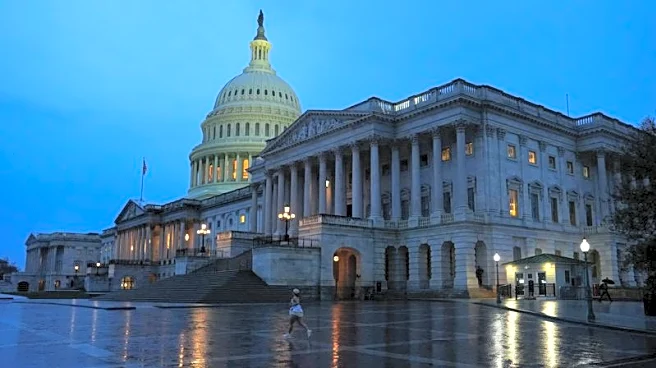
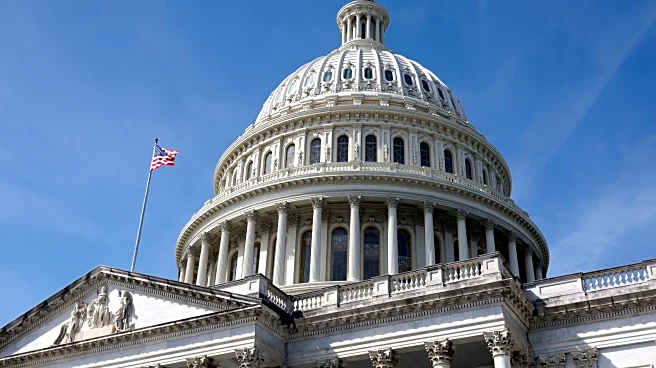
The U.S. House of Representatives has passed a temporary funding bill aimed at fully financing the Department of Homeland Security (DHS), including Immigration and Customs Enforcement (ICE) and Customs and Border Protection. Despite this legislative move,
the ongoing government shutdown is expected to persist as the bill is anticipated to be rejected in the Senate. The House's decision comes amid heightened political tensions and a pressing need to address the operational funding of key security agencies. NBC News reports that the bill's passage in the House does not guarantee its success in the Senate, where it is considered 'dead on arrival.' This development highlights the ongoing legislative gridlock and the challenges in reaching a bipartisan agreement on funding critical government functions.
Why It's Important?
The passage of the DHS funding bill by the House is significant as it underscores the ongoing struggle to secure operational funding for essential government agencies amid a government shutdown. The potential rejection of the bill in the Senate could prolong the shutdown, affecting the operations of DHS, ICE, and Customs and Border Protection. This situation has broader implications for national security, immigration enforcement, and border management. The inability to reach a consensus on funding could lead to operational disruptions, impacting the safety and security of the nation. Additionally, the political stalemate reflects deeper partisan divides that could influence future legislative negotiations and public policy decisions.
What's Next?
If the Senate rejects the House-passed funding bill, the government shutdown is likely to continue, prompting further negotiations between the two chambers. Lawmakers may need to explore alternative funding proposals or compromises to resolve the impasse. The ongoing shutdown could lead to increased pressure from affected government employees, security agencies, and the public for a swift resolution. Political leaders may face mounting calls to prioritize national security and operational continuity over partisan disagreements. The outcome of these negotiations will be closely watched as it could set a precedent for future budgetary and legislative processes.