




What's Happening?
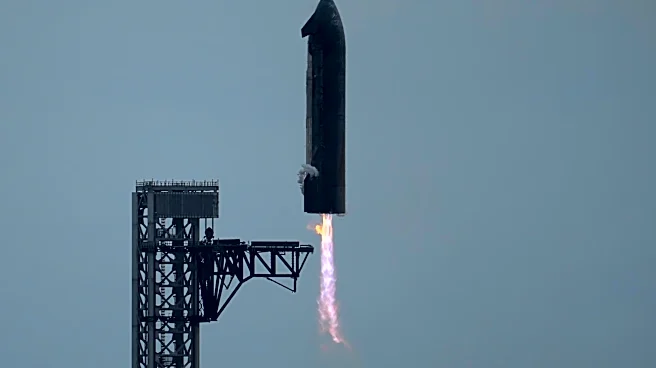
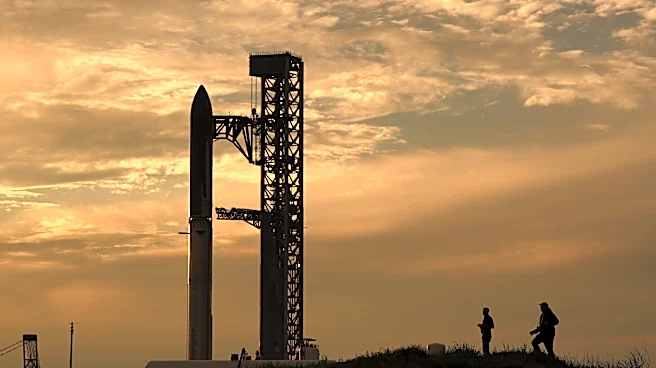
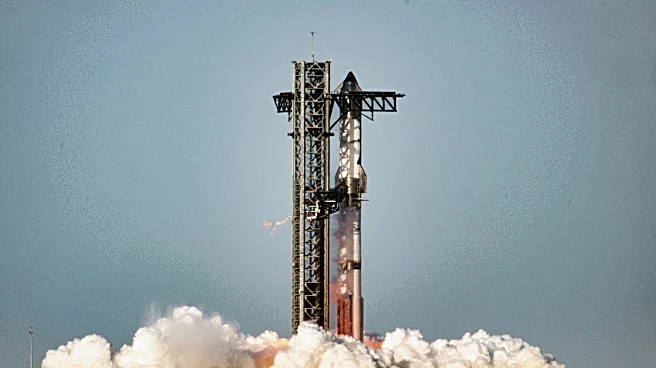
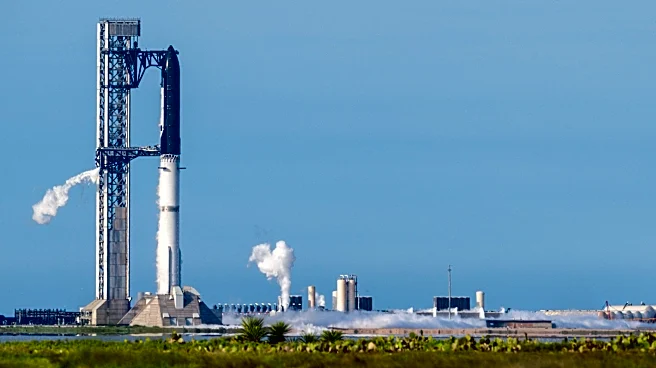
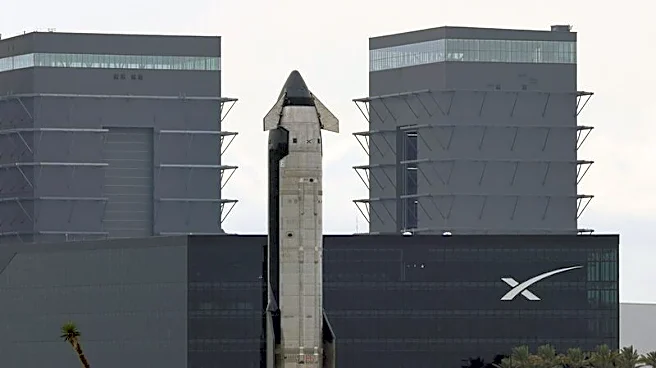
SpaceX successfully completed the first recovery of a Starship upper stage at its launch tower in Boca Chica, Texas, on November 14, 2026. This event, part of Flight 15, saw the Starship upper stage return from orbit after 14 revolutions around Earth
and deploy 26 Starlink V3 satellites. The Starship performed a 'belly flop' maneuver, descending parallel to the ground before firing its engines for a landing burn and coming to rest within the 'Mechazilla' arms of the launch tower. While the Super Heavy booster encountered an issue and exploded before splashdown in the Gulf of Mexico, the successful catch of the upper stage marks a significant milestone for SpaceX. According to Kate Tice, SpaceX’s director of quality management and training, the booster's early termination was due to a low fuel mass alarm, indicating it autonomously followed safety protocols. Dan Huot of SpaceX described the event as 'the missing link, the holy grail of spaceflight,' emphasizing its transformative impact on space travel.
Why It's Important?
The successful recovery of the Starship upper stage is a critical step towards SpaceX's goal of fully reusable rocket systems, which could drastically reduce mission costs and enable more frequent launches. This achievement is particularly important for the U.S. space industry, as reliable and frequent orbital flights of Starship are essential for building out the Starlink broadband constellation. SpaceX plans to retire its Falcon 9 rocket, currently a workhorse for U.S. and global space launches, making Starship's reusability crucial for future operations. Furthermore, Starship is central to NASA's plans to return humans to the moon, with SpaceX having secured $2.9 billion in contracts to supply lunar lander Starship variants for Artemis crewed missions. The ability to rapidly reuse the Starship could accelerate lunar exploration and other deep-space missions, impacting U.S. leadership in space. The development also has implications for the satellite internet market, as the deployment of Starlink V3 satellites enhances global connectivity.
What's Next?
SpaceX will continue to investigate the root cause of the Super Heavy booster's early termination during Flight 15 to refine its booster recovery processes. The company's immediate focus will likely be on achieving consistent reusability for both the Starship upper stage and the Super Heavy booster. A test article of the Starship lander is slated to fly next year in the Artemis III mission, which NASA now plans as a two-week demonstration in low-Earth orbit to test docking maneuvers between the Orion capsule and test versions of the Starship and Blue Origin Blue Moon landers. This upcoming mission will be a crucial step in validating Starship's capabilities for crewed lunar missions. Continued progress in Starship's reusability will also be vital for the expansion of the Starlink constellation, impacting global internet access and competition in the satellite broadband market.
Beyond the Headlines
The successful Starship catch represents a paradigm shift in spaceflight, moving closer to a future where rockets are reused like airplanes. This advancement has profound implications beyond mere cost reduction, potentially democratizing access to space and accelerating scientific discovery. The ability to launch and recover spacecraft with minimal turnaround time could enable more ambitious research missions, asteroid mining, and even space tourism on an unprecedented scale. Ethically, the increased frequency of launches and satellite deployments raises questions about space debris and orbital traffic management, requiring international cooperation to ensure sustainable space operations. Culturally, this milestone reinforces the vision of a multi-planetary future, inspiring new generations in STEM fields and pushing the boundaries of human ingenuity. The long-term impact could reshape global economies, defense strategies, and our understanding of humanity's place in the cosmos.