





What's Happening?
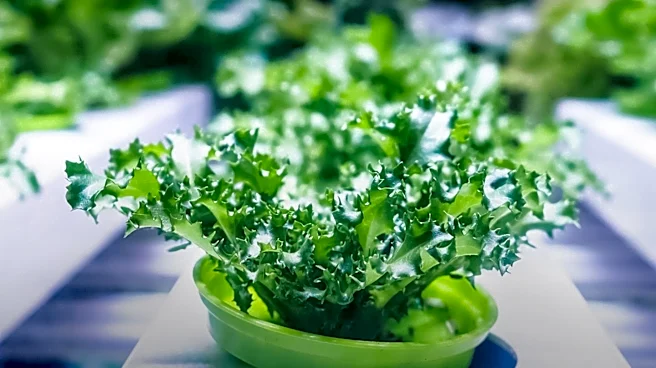
Scientists have successfully cultivated Spirulina, a blue-green algae, to produce biologically active vitamin B12 at levels comparable to beef. This breakthrough, detailed in the scientific journal Discover Food, addresses a significant nutritional limitation
of traditional Spirulina, which contains a form of B12 not bioavailable to humans. The research team, led by Dr. Asaf Tzachor of Reichman University, utilized advanced biotechnology and controlled light conditions to achieve this. The resulting carbon-neutral Spirulina biomass contains 1.64 µg of active vitamin B12 per 100 grams, surpassing the 0.7-1.5 µg per 100 grams found in beef. This development could provide a sustainable solution to vitamin B12 deficiency, a condition affecting over a billion people globally, while reducing reliance on animal agriculture. The cultivated Spirulina also exhibited other beneficial compounds with antioxidant, anti-inflammatory, and immune-boosting properties.
Why It's Important?
This scientific advancement holds significant implications for global nutrition and sustainable food systems. Vitamin B12 is crucial for human health, involved in red blood cell formation and nervous system function, and its deficiency is widespread. Currently, meat and dairy products are primary dietary sources, but their production carries substantial environmental costs. The ability to produce bioavailable vitamin B12 from Spirulina offers a plant-based, environmentally friendly alternative, potentially reducing the ecological footprint associated with conventional livestock farming. This could lead to a shift in dietary recommendations and food production strategies, particularly for vegetarian and vegan populations who often struggle to obtain sufficient B12. Furthermore, the technology demonstrates how biotechnology can enhance the nutritional profiles of rapidly growing food sources, paving the way for future innovations in sustainable food production.
What's Next?
The researchers have explored the scalability of this Spirulina production system, projecting that reallocating electricity from heavy industry in Iceland could yield 277,950 tonnes of Spirulina biomass annually. This quantity could supply the recommended dietary allowance of vitamin B12 for over 13.8 million children aged 1-3. More ambitious scenarios suggest the potential to meet the B12 needs of over 50 million children aged 0-6 months. While these are projections, they highlight the significant potential for large-scale implementation. Further research will focus on optimizing production for broader application and integrating this technology into existing food systems. The next steps involve scaling up production beyond current levels and conducting real-world trials to assess its efficacy and acceptance as a dietary supplement or food ingredient.
Beyond the Headlines
This breakthrough extends beyond simply providing a new source of vitamin B12; it underscores the transformative potential of biotechnology in addressing complex global challenges like food security and environmental sustainability. By altering the growth conditions of microorganisms, scientists can engineer food sources to meet specific nutritional needs, moving beyond traditional agricultural limitations. This approach could mitigate the environmental impact of food production, particularly in regions where animal agriculture is resource-intensive. Ethically, it raises questions about consumer acceptance of bio-engineered food sources and the potential for equitable distribution of such innovations. Long-term, this technology could contribute to a more resilient and diverse global food supply, less susceptible to climate change and resource depletion, by offering nutrient-dense alternatives that are both sustainable and scalable.